
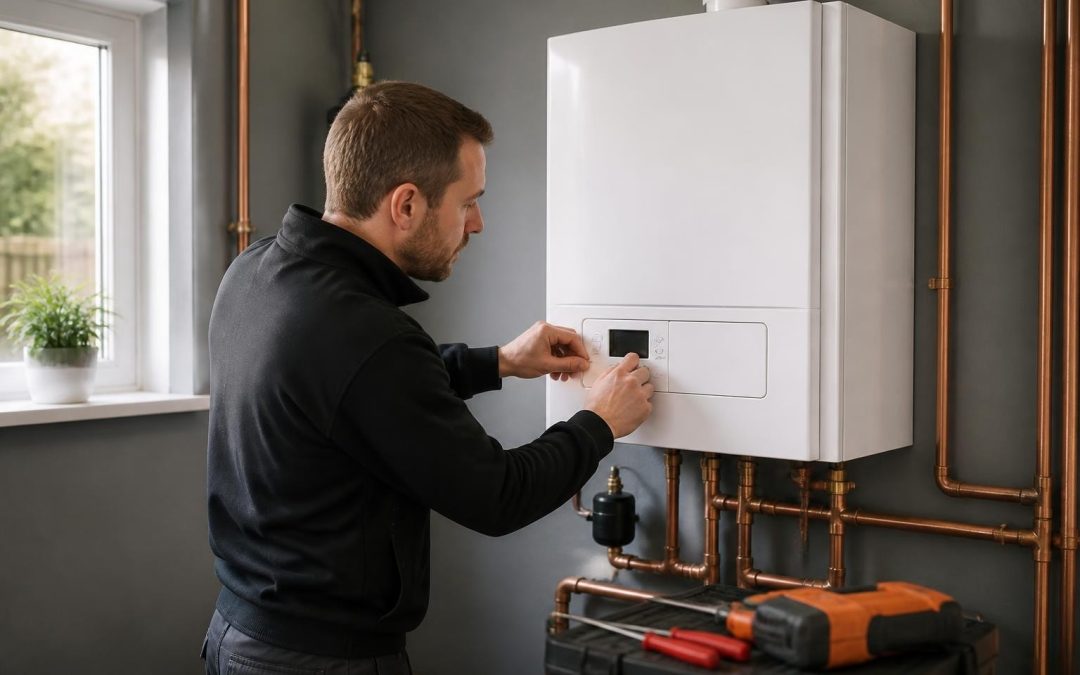
Finding reliable boiler fitting services in your local area requires more than a simple internet search. Whether you're replacing an outdated system, upgrading to a more efficient model, or installing a boiler in a new property, selecting the right professionals ensures safety, compliance, and long-term performance. The decision to search for "boiler fitting near me" often arises when homeowners face heating emergencies, rising energy bills, or during planned home renovations. Understanding what separates qualified installers from unqualified contractors can save thousands of pounds and prevent potentially dangerous situations. This comprehensive guide walks you through everything you need to know about boiler fitting services, from initial research to final installation.
Understanding Professional Boiler Fitting Services
When you search for boiler fitting near me, you're looking for more than just someone who can connect pipes and wires. Professional boiler fitting encompasses a complete range of services designed to ensure your heating system operates safely and efficiently.
Qualified boiler fitters must possess specific certifications and training. In the United Kingdom, Gas Safe registration remains mandatory for anyone working with gas boilers. This certification demonstrates that technicians have undergone rigorous training and assessment to work safely with gas appliances. Beyond basic qualifications, experienced fitters understand building regulations, heating system design, and modern efficiency standards.
The scope of professional boiler installation services includes several critical components:
- Complete system assessment and sizing calculations
- Removal and disposal of existing equipment
- Installation of new boiler and associated components
- Integration with existing heating infrastructure
- System commissioning and testing
- Building control notification and certification
- Customer training and handover documentation
Types of Boiler Systems Available
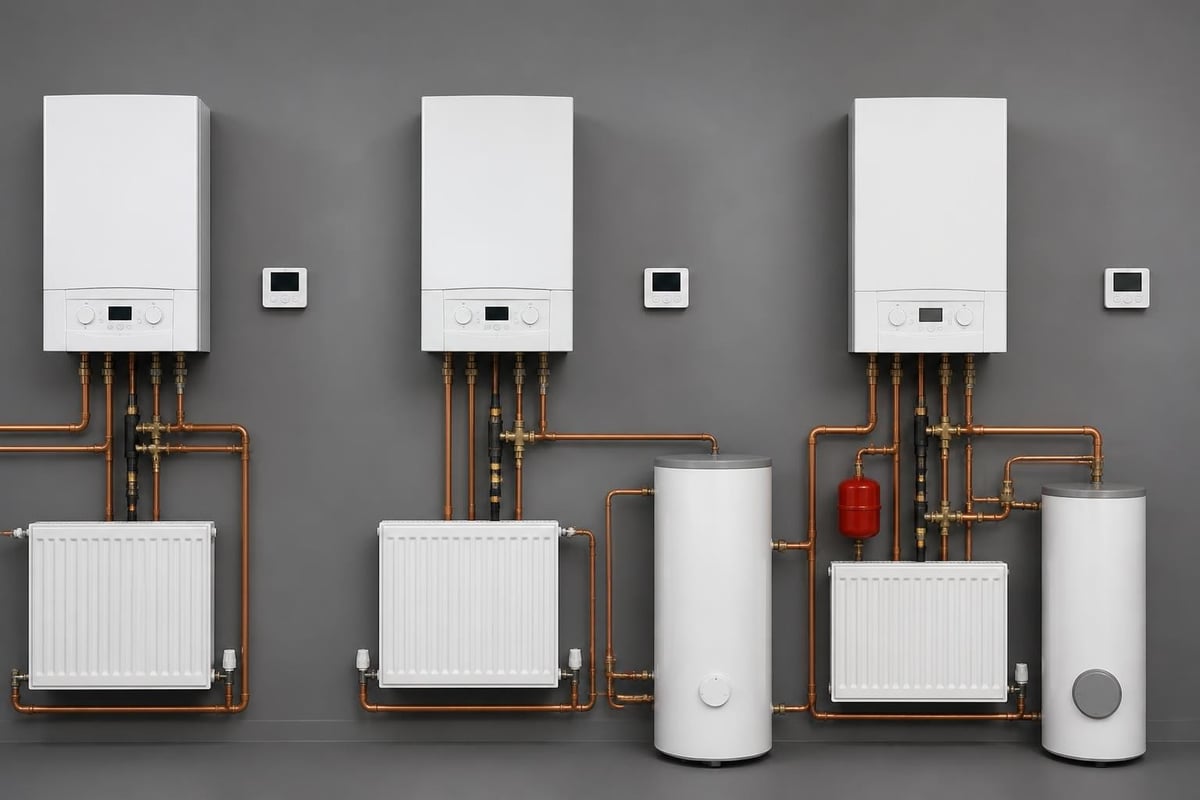
Different properties require different boiler solutions. Understanding the options helps you make informed decisions when consulting with local fitters.
| Boiler Type | Best For | Advantages | Considerations |
|---|---|---|---|
| Combi Boiler | Small to medium homes | No cylinder needed, instant hot water | Limited flow rate for multiple outlets |
| System Boiler | Medium to large homes | Good for multiple bathrooms | Requires cylinder space |
| Conventional Boiler | Large properties with high demand | Excellent flow rates | Needs loft space for tanks |
| Biomass Boiler | Rural properties, eco-conscious homes | Renewable fuel source, lower running costs | Requires fuel storage space |
Many North East homeowners now consider renewable energy heating systems as viable alternatives to traditional gas boilers. Biomass options, heat pumps, and hybrid systems offer long-term environmental and financial benefits, though they require careful assessment of property suitability.
What to Look for When Searching Boiler Fitting Near Me
The search results page might display dozens of companies, but several key factors distinguish exceptional service providers from average contractors.
Certifications and accreditations form the foundation of trustworthy service. Every boiler fitter you consider must hold current Gas Safe registration if working with gas appliances. Beyond this essential requirement, look for memberships in professional bodies such as the Chartered Institute of Plumbing and Heating Engineering (CIPHE) or manufacturer-specific accreditations.
Experience matters significantly in boiler fitting. Companies with decades of experience, such as those operating since 1983, have encountered virtually every installation scenario and complication. This depth of knowledge translates to smoother installations, better problem-solving, and more reliable long-term performance.
Assessing Local Reputation and Reviews
Digital reviews provide valuable insights, but interpret them carefully:
- Look for patterns rather than individual complaints
- Check responses to negative reviews
- Verify reviews across multiple platforms
- Ask for references from recent installations
- Confirm how long the company has served your area
Local companies often provide superior service compared to national chains. They understand regional building characteristics, respond faster to urgent calls, and maintain reputations within tight-knit communities. Their technicians typically know local suppliers, which can expedite parts acquisition during installations or repairs.
The Boiler Fitting Process Explained
Understanding what happens during a professional boiler installation helps set realistic expectations and ensures you can identify quality workmanship.
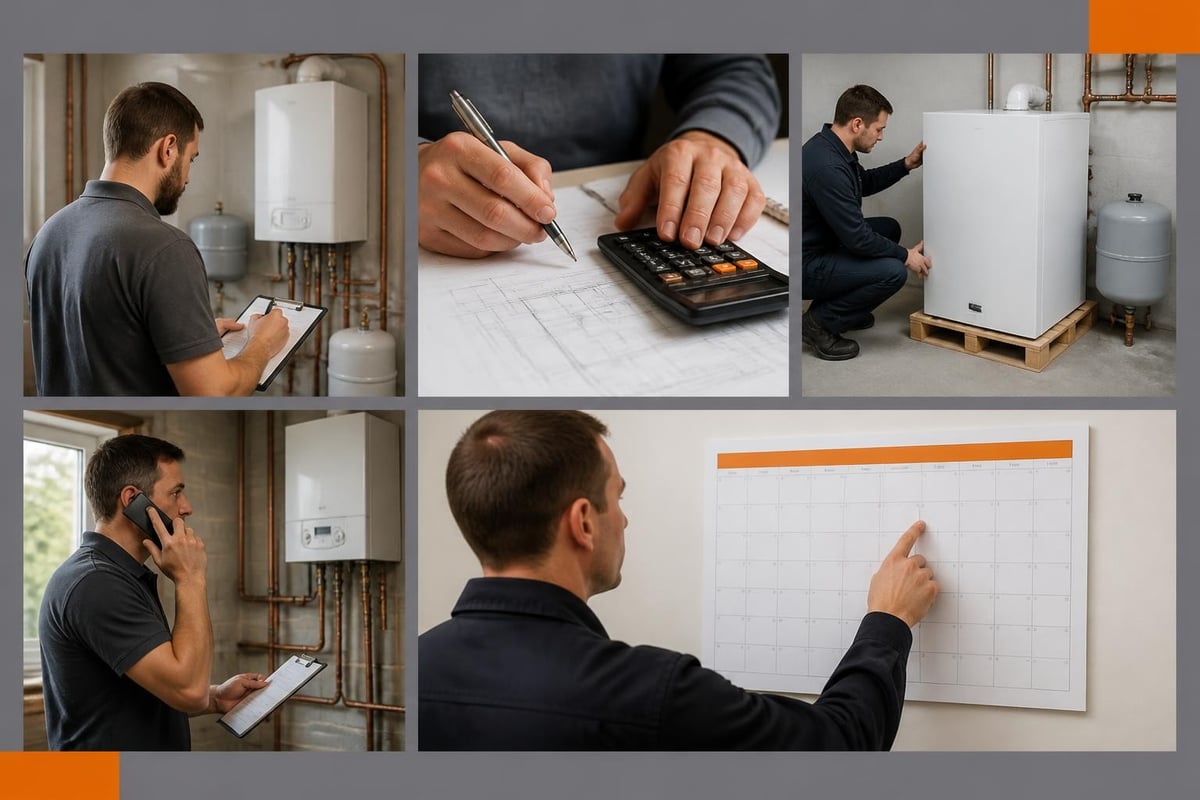
Initial Assessment and Survey
Professional fitters begin with thorough property assessments before providing quotes. This survey identifies:
- Current system configuration and condition
- Property size and heating requirements
- Hot water demand patterns
- Existing pipework and radiator conditions
- Flue positioning options
- Gas supply adequacy
- Building regulation compliance requirements
The survey typically takes 45-90 minutes for a standard residential property. Fitters should ask detailed questions about your heating preferences, household size, and future plans. This information ensures they recommend appropriately sized equipment rather than simply replacing your existing boiler with an identical model.
Installation Day Procedures
Professional boiler installation follows systematic procedures to ensure safety and compliance. Quality installers arrive with all necessary equipment, complete installations efficiently, and leave properties clean and tidy.
The installation timeline varies based on system complexity:
- Straightforward combi boiler replacement: 1 day
- System boiler installation with cylinder: 1-2 days
- Complete system upgrades with pipework modifications: 2-3 days
- Biomass or renewable system installations: 2-4 days
During installation, homeowners should expect some disruption to heating and hot water services. Professional teams minimize inconvenience by planning work strategically and communicating clearly about service interruptions.
Costs and Financing Options for Boiler Fitting
Boiler fitting near me searches often lead to questions about pricing. Installation costs vary significantly based on multiple factors, making accurate budgeting essential.
Price Influencing Factors
Several variables affect the total investment required for professional boiler fitting:
- Boiler type and efficiency rating: High-efficiency condensing boilers cost more initially but reduce running costs
- Property configuration: Complex installations with difficult access increase labour time
- System modifications: Upgrading pipework, radiators, or controls adds expense
- Flue requirements: Extended or complicated flue runs increase material and labour costs
- Building work: Relocating boilers often requires structural modifications
Average costs in 2026 for the North East region range from £1,800 for basic combi boiler replacements to £5,000+ for complete system upgrades with premium equipment. Understanding comprehensive plumbing and central heating requirements helps avoid unexpected expenses during installation.
Financing Your Installation
Financial constraints shouldn't prevent essential heating system upgrades. Many reputable companies now offer flexible payment options that make installations more accessible.
Available financing solutions include:
- Interest-free credit spreading costs over 12-24 months
- Low-interest payment plans for larger installations
- Government grants and schemes for efficiency upgrades
- Energy company obligations providing discounted installations for eligible households
Interest-free financing allows homeowners to spread costs into manageable monthly payments without accruing additional charges. This approach makes premium, high-efficiency systems accessible to more households, delivering long-term savings that offset installation costs.
Building Regulations and Compliance Requirements
Legal compliance isn't optional when installing boilers. Understanding regulatory requirements protects homeowners from future complications and ensures safe operation.
Notification and Certification
All boiler installations must comply with current Building Regulations. In England, this typically means:
- Notification to Building Control: Installers must notify local authorities before commencing work or use a competent person scheme
- Gas Safe compliance: Gas work must be performed by registered engineers who issue safety certificates
- Installation certificates: Homeowners receive documentation confirming compliance with all relevant standards
- Benchmark commissioning: Manufacturers require proper commissioning documentation to validate warranties
Understanding boiler registration requirements ensures your installation meets all legal obligations. Failure to obtain proper certification can affect property sales, insurance validity, and create potential safety hazards.
Safety Standards and Testing
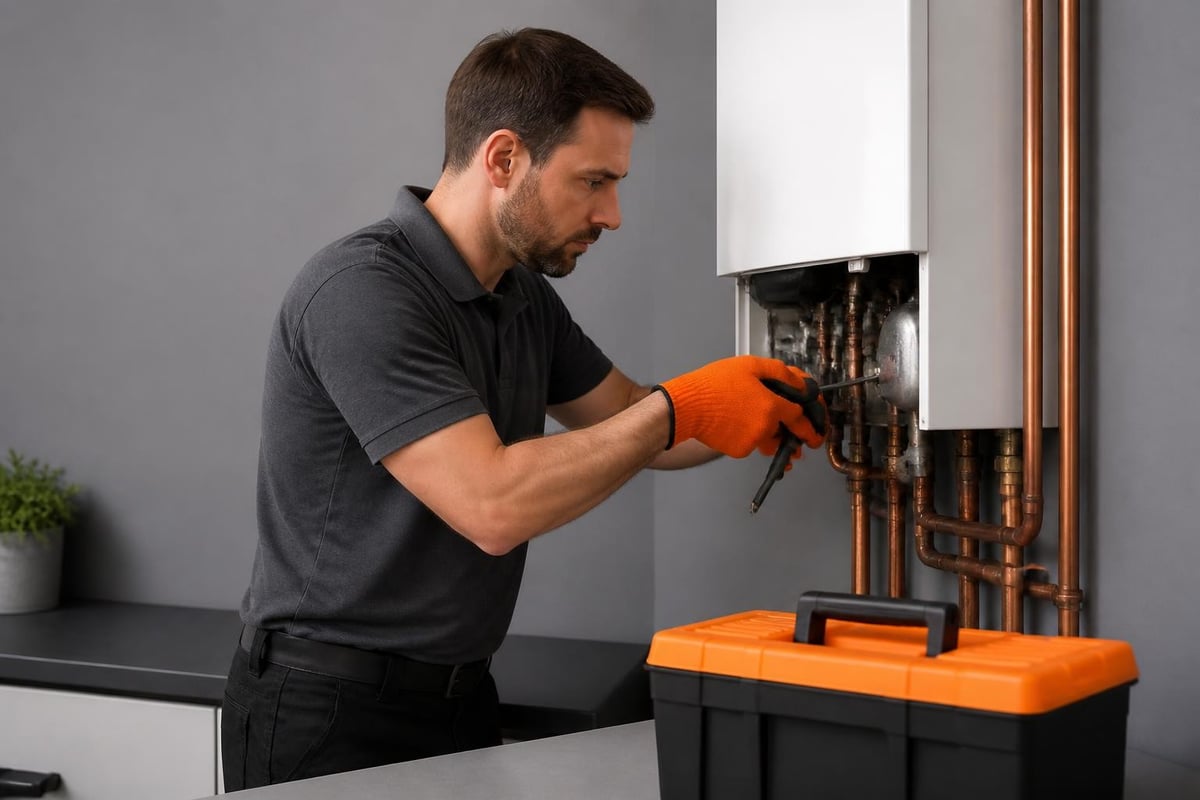
Professional fitters perform comprehensive safety checks during and after installation. These tests verify:
- Gas pressure and flow rates
- Flue integrity and combustion efficiency
- Carbon monoxide detector functionality
- System pressurization and leak testing
- Control operation and thermostat calibration
- Radiator balancing and distribution
Documentation of these tests provides peace of mind and creates valuable records for future service visits. Homeowners should always receive and retain these certificates as proof of compliant installation.
Maintaining Your Newly Fitted Boiler
Installation quality determines initial performance, but ongoing maintenance ensures long-term reliability and efficiency. Professional fitters should provide clear guidance on maintenance requirements.
Annual Service Requirements
Modern boilers require professional servicing every 12 months to maintain efficiency, safety, and warranty validity. Annual services typically include:
- Combustion analysis and efficiency testing
- Heat exchanger inspection and cleaning
- Safety device verification
- Pressure and expansion vessel checks
- Control system calibration
- Flue integrity assessment
Many installation companies offer service contracts that bundle annual maintenance with priority emergency response and discounted repairs. These agreements provide budget certainty and ensure regular professional attention to your heating system.
Homeowner Responsibilities
Between professional services, homeowners can perform simple maintenance tasks:
- Monitor pressure gauge and repressurize when necessary
- Bleed radiators if cold spots develop
- Check for visible leaks or unusual noises
- Ensure adequate ventilation around the boiler
- Test controls and thermostats regularly
Understanding how your specific system operates helps identify problems early. During installation, reputable fitters provide thorough handover training, explaining controls, basic troubleshooting, and when to call professionals.
Choosing Between Local and National Providers
The boiler fitting near me search returns both local specialists and national chains. Each option offers distinct advantages and potential drawbacks.
Benefits of Local Specialists
Regional companies serving specific areas often deliver superior customer experiences:
Personal service and accountability: Local businesses depend on community reputation, motivating exceptional service delivery. They respond faster to concerns and prioritize customer satisfaction to maintain referral networks.
Regional expertise: Companies serving the North East for decades understand local property types, common installation challenges, and regional building characteristics. This familiarity accelerates installations and reduces complications.
Accessible support: Local teams can quickly attend emergencies or follow-up appointments. Rather than navigating national call centers, customers contact familiar faces who know their installation history.
National Chain Considerations
Larger organizations provide certain advantages, including extensive resources, standardized procedures, and potentially broader product ranges. However, they may lack the personal touch and rapid response times that local specialists offer.
| Aspect | Local Specialists | National Chains |
|---|---|---|
| Response Time | Typically faster | May require longer scheduling |
| Personal Service | High, relationship-focused | Standardized processes |
| Local Knowledge | Extensive regional expertise | General knowledge |
| Pricing | Competitive, flexible | Fixed pricing structures |
| Long-term Support | Accessible for years ahead | Potential franchise changes |
Questions to Ask Potential Installers
Before committing to a boiler fitting company, ask specific questions that reveal their expertise and reliability. Professional companies welcome detailed inquiries and provide comprehensive answers.
Essential Pre-Installation Questions
Prepare a structured list to evaluate potential installers:
-
What certifications do your technicians hold? Verify current Gas Safe registration numbers online before booking.
-
How long have you operated in this region? Established companies demonstrate stability and accumulated expertise.
-
What warranty covers the installation work? Separate from manufacturer warranties, installer guarantees protect against workmanship issues.
-
Can you provide recent customer references? Speaking with previous customers reveals service quality and reliability.
-
What's included in your quoted price? Clarify whether costs cover removal, disposal, commissioning, certification, and any necessary modifications.
-
How do you handle unexpected complications? Understanding change order processes prevents disputes during installation.
-
What payment terms do you offer? Confirm deposit requirements and final payment timing.
Professional installers provide detailed written quotations specifying equipment models, work scope, timelines, and payment terms. Vague estimates or reluctance to document agreements signal potential problems.
Understanding Service Agreements
Many companies offer ongoing maintenance contracts. Evaluate these agreements carefully:
- Annual service frequency and timing flexibility
- Parts and labour coverage details
- Emergency callout response times
- Contract duration and renewal terms
- Price guarantees and inflation protection
Comprehensive service agreements provide excellent value, particularly for homeowners who prefer predictable maintenance costs and priority service access.
Common Installation Challenges and Solutions
Even straightforward boiler replacements occasionally encounter complications. Understanding potential challenges helps homeowners prepare and recognize when problems require professional intervention.
Typical Installation Obstacles
Outdated pipework and connections: Older properties may have pipework that doesn't meet current standards, requiring partial system upgrades beyond basic boiler replacement.
Inadequate gas supply: Some installations reveal insufficient gas pipe sizing for modern high-output boilers, necessitating supply upgrades from the meter.
Flue positioning restrictions: Building regulations specify minimum distances between flues and windows, boundaries, or openings. Repositioning boilers or extending flues may be required.
Asbestos discovery: Properties built before 2000 might contain asbestos materials around existing boilers, requiring specialist removal before proceeding.
Understanding professional installation standards helps homeowners appreciate the complexity involved in compliance and safety requirements. Experienced fitters anticipate and navigate these challenges efficiently.
Modern Integration Considerations
Contemporary heating systems increasingly integrate with smart home technology and renewable energy sources. When searching for boiler fitting near me, consider future-proofing options:
- Smart thermostat compatibility: Ensure new boilers work with intelligent controls for optimized efficiency
- Weather compensation: Advanced controls adjust output based on external temperatures
- Hybrid readiness: Some installations can accommodate future heat pump integration
- Underfloor heating compatibility: Properties with or considering underfloor heating services require specific boiler configurations
Seasonal Considerations for Boiler Installation
Timing your boiler fitting can affect both installation experience and costs. Strategic scheduling delivers several advantages.
Optimal Installation Periods
Spring and summer installations offer multiple benefits:
- Greater availability and flexible scheduling
- Potentially negotiable pricing during quieter periods
- More comfortable working conditions for installers
- Extended testing periods without immediate heating dependency
- Time to address any teething problems before winter
Conversely, emergency winter replacements often occur during peak demand periods, potentially increasing costs and extending wait times for appointments. Proactive replacement before complete failure provides more control over timing and budget.
Emergency Replacement Scenarios
Despite careful planning, boilers sometimes fail unexpectedly. When searching urgently for boiler fitting near me during breakdowns, prioritize:
- Immediate safety: If you smell gas or suspect carbon monoxide, evacuate immediately and contact emergency services
- Rapid assessment: Contact multiple local companies to compare emergency availability
- Temporary solutions: Ask about interim heating options during installation delays
- Expedited options: Understand premium charges for emergency or out-of-hours work
Established local companies often maintain emergency response capabilities and stock commonly needed equipment, enabling faster resolutions than companies ordering from distant suppliers.
Environmental and Efficiency Considerations
Modern boiler technology delivers substantial efficiency improvements over systems installed even ten years ago. When researching boiler fitting near me, environmental performance should influence decisions.
Efficiency Ratings and Classifications
Boilers receive ErP (Energy-related Products) ratings from A+++ (most efficient) to G (least efficient). Modern condensing boilers typically achieve A-ratings, delivering several benefits:
- Reduced energy consumption: High-efficiency units convert more fuel into usable heat
- Lower carbon emissions: Improved combustion reduces environmental impact
- Decreased running costs: Better efficiency translates directly to reduced fuel bills
- Enhanced property values: Energy-efficient systems appeal to environmentally conscious buyers
The initial premium for high-efficiency models typically recovers within 3-5 years through reduced operating costs, making them financially prudent long-term investments.
Renewable and Low-Carbon Alternatives
Beyond conventional gas boilers, several alternative technologies merit consideration during installation planning:
Biomass boilers: Burning sustainable wood pellets or chips provides renewable heating with potential long-term cost savings. These systems suit rural properties with adequate fuel storage space and access to affordable biomass supplies.
Heat pumps: Air source and ground source heat pumps extract ambient heat from surroundings. While installation costs exceed traditional boilers, running costs can be significantly lower with renewable electricity tariffs.
Hybrid systems: Combining conventional boilers with heat pumps optimizes efficiency across different operating conditions, using the most economical technology for prevailing circumstances.
Evaluating these alternatives requires professional assessment of property characteristics, existing infrastructure, and household heating patterns. Experienced heating service providers can model different scenarios and recommend optimal solutions for specific situations.
The Importance of Proper System Sizing
One critical aspect often overlooked during boiler replacement involves ensuring appropriate system sizing. Incorrectly sized equipment creates multiple problems affecting comfort, efficiency, and longevity.
Oversizing Consequences
Many homeowners assume larger boilers perform better, but oversized systems create several issues:
- Reduced efficiency: Frequent cycling on and off wastes energy
- Shortened equipment lifespan: Excessive cycling accelerates component wear
- Inconsistent temperatures: Systems struggle to maintain steady heat output
- Increased maintenance: More frequent servicing becomes necessary
Proper Sizing Methodology
Professional installers calculate heat requirements based on:
- Property dimensions and volume: Total space requiring heating
- Insulation levels: Wall, roof, and floor insulation quality
- Window specifications: Glazing type and total window area
- Usage patterns: Occupancy levels and hot water demand
- Climate factors: Regional temperature variations
Following a comprehensive installation checklist ensures all sizing factors receive proper consideration. This methodical approach delivers optimally performing systems tailored to specific properties rather than generic replacements.
Regional Factors Affecting Boiler Fitting in the North East
Geographical location influences various aspects of boiler installation. The North East presents specific considerations that experienced regional installers understand thoroughly.
Climate Considerations
The North East experiences cold winters requiring robust heating systems capable of maintaining comfort during extended freezing periods. Boiler specifications must account for:
- Extended heating season duration
- Lower average winter temperatures
- Increased hot water demand during colder months
- Potential for frozen condensate pipes requiring protective measures
Local installers familiar with regional weather patterns incorporate protective features such as trace heating for external condensate runs and appropriately sized systems for sustained cold weather operation.
Property Characteristics
North East housing stock includes diverse property types, each presenting unique installation considerations:
- Victorian and Edwardian properties: Often feature high ceilings, solid walls, and existing conventional boiler systems
- Post-war housing: Typically includes cavity walls and may have space constraints for modern equipment
- Modern developments: Usually designed for combi boilers with pre-installed infrastructure
- Rural properties: May lack mains gas, requiring oil or LPG systems
Experienced regional specialists navigate these variations efficiently, drawing on extensive local installation experience to overcome property-specific challenges.
Selecting qualified professionals for your boiler installation ensures safety, efficiency, and long-term satisfaction with your heating system. By understanding the installation process, regulatory requirements, and key selection criteria, you can make informed decisions that deliver reliable comfort for years ahead. For expert boiler fitting backed by over four decades of experience serving the North East, including flexible 0% interest financing options, NU Heat North East Ltd provides comprehensive heating solutions tailored to your specific requirements.