
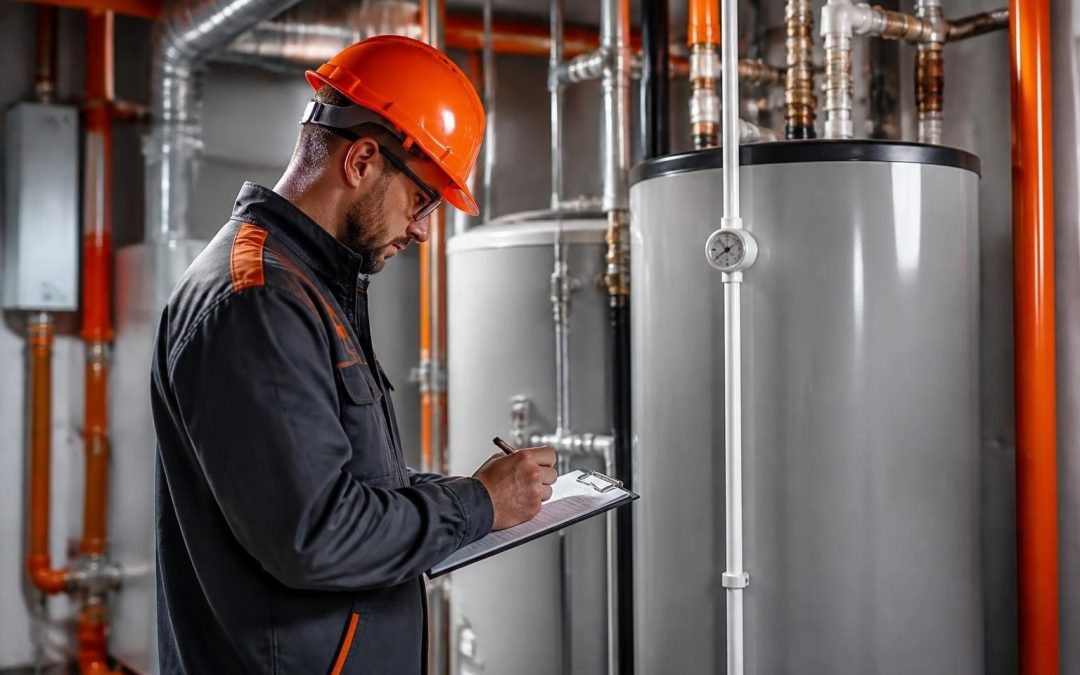
Selecting and installing the right commercial water heating system is one of the most critical infrastructure decisions a business can make. Unlike residential units, commercial systems must handle substantially higher demand, operate with greater efficiency, and comply with more stringent regulatory standards. Whether you're fitting out a new hospitality venue, upgrading an ageing system in a manufacturing facility, or expanding capacity at a care home, understanding the complexities of commercial water heater installation ensures your business maintains reliable hot water supply whilst controlling operational costs. This comprehensive guide explores the key considerations, best practices, and technical requirements that define successful commercial installations in 2026.
Understanding Commercial Water Heater Systems
Commercial water heaters differ fundamentally from their residential counterparts in capacity, construction, and operational demands. These systems are engineered to deliver consistent hot water to multiple outlets simultaneously, often operating continuously throughout business hours.
The primary distinction lies in recovery rate – the speed at which a system can reheat water after use. Commercial environments such as restaurants, hotels, and leisure facilities require rapid recovery to maintain service quality during peak demand periods. Storage capacity also varies significantly, with commercial units ranging from 190 litres to over 1,900 litres, compared to typical residential systems of 120-190 litres.
System Categories and Applications
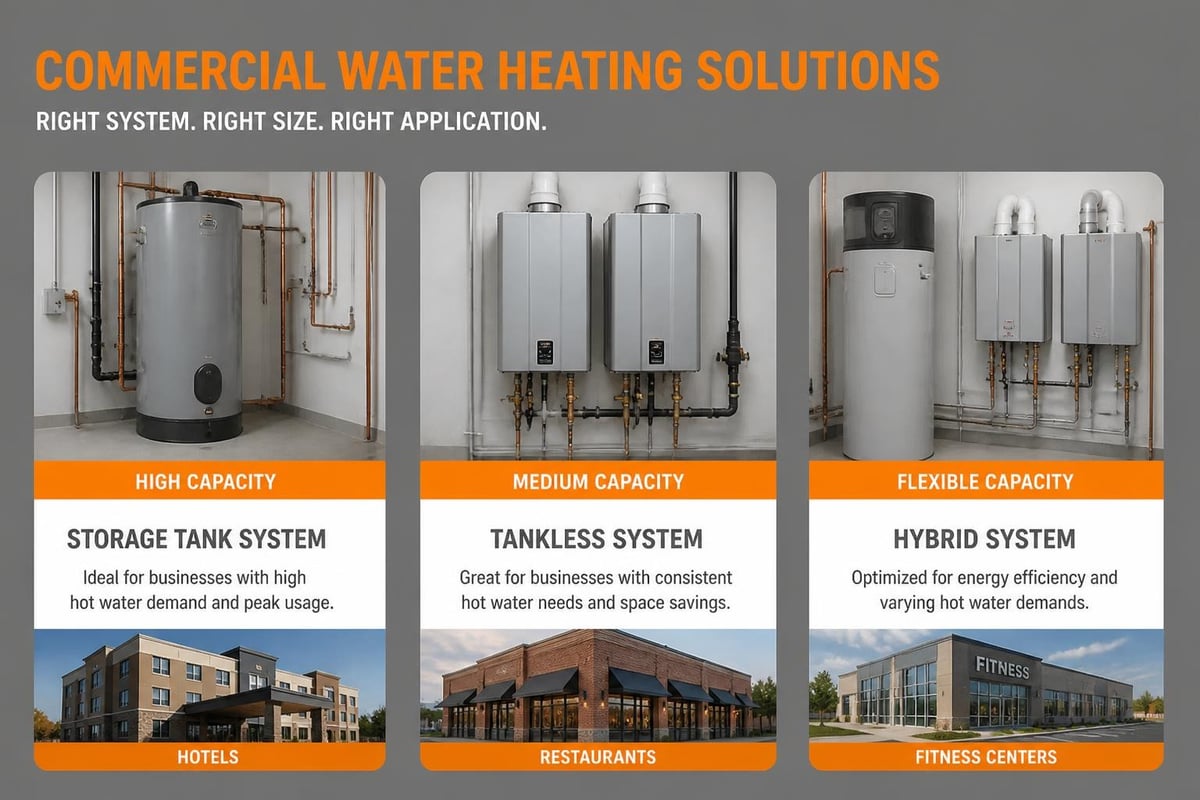
Storage Tank Systems remain the most common choice for businesses with predictable demand patterns. These units maintain a reservoir of heated water, making them ideal for:
- Hotels and guest houses requiring morning peak capacity
- Healthcare facilities needing constant hot water availability
- Educational institutions with defined usage schedules
- Manufacturing operations with process heating requirements
Tankless or Instantaneous Systems heat water on demand, eliminating standby energy losses. These units excel in applications where space is limited or demand is sporadic, though they require careful sizing to meet peak flow rates.
Hybrid Systems combine storage with on-demand heating, offering flexibility for businesses with variable usage patterns. According to best practices outlined by industry professionals, hybrid configurations can reduce energy consumption by up to 30% compared to traditional storage systems.
Assessing Your Hot Water Requirements
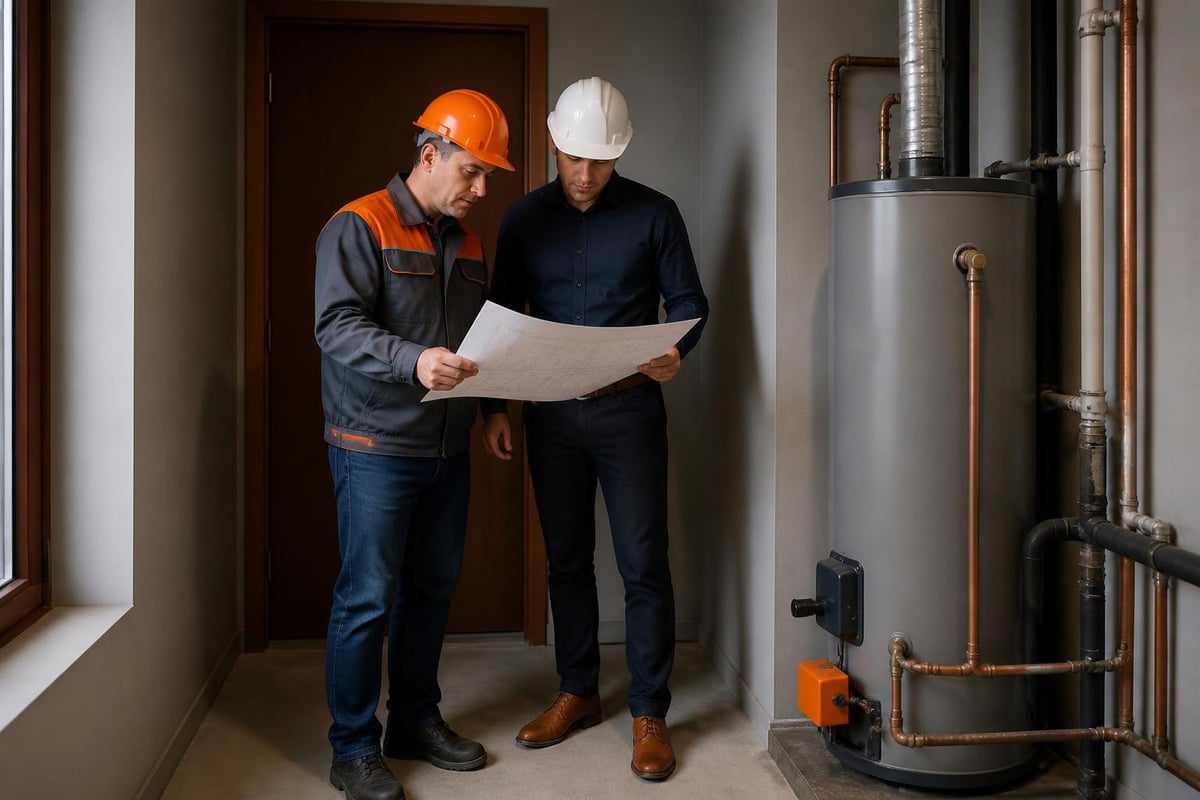
Accurate demand calculation forms the foundation of successful commercial water heater installation. Undersizing leads to service disruptions and customer dissatisfaction, whilst oversizing wastes capital and inflates operating costs.
Professional assessment begins with fixture unit analysis – counting all hot water outlets and calculating simultaneous usage probability. A restaurant kitchen, for example, might operate multiple dishwashers, hand-washing stations, and preparation sinks concurrently during service periods.
Demand Calculation Methodology
| Business Type | Peak Demand Factor | Typical Capacity Range |
|---|---|---|
| Restaurants | 3-5 gallons per seat | 380-950 litres |
| Hotels | 30-40 gallons per room | 1,140-1,520 litres |
| Gyms & Leisure | 1.5 gallons per member | 570-1,900 litres |
| Care Homes | 25-35 gallons per resident | 950-1,330 litres |
| Offices | 0.5 gallons per employee | 190-570 litres |
Temperature rise requirements also influence sizing. Water enters the system at ground temperature (typically 10-15°C in the UK) and must be heated to 60°C for storage (to prevent Legionella growth) and delivered at 50°C to outlets. Similar principles apply when planning any central heating installation, where system capacity must match building requirements.
The Department of Energy provides detailed classifications that help businesses understand efficiency standards and capacity requirements for different commercial applications.
Fuel Type Selection and Energy Efficiency
Commercial water heaters operate on natural gas, LPG, electricity, or increasingly, renewable energy sources. Fuel choice impacts installation costs, operational expenses, and environmental footprint.
Natural Gas Systems deliver the lowest operating costs in areas with mains gas availability. Modern condensing units achieve efficiency ratings exceeding 95%, recovering heat from exhaust gases that traditional models vent away. Installation requires proper ventilation and gas supply infrastructure.
Electric Systems eliminate flue requirements and suit locations without gas connections. Heat pump water heaters can achieve 300% efficiency by extracting ambient heat, though they require adequate ventilation space and perform best in warmer environments.
Biomass and Renewable Integration offers substantial long-term savings. Businesses can integrate commercial water heaters with solar thermal systems or biomass boilers, reducing fossil fuel dependency. Companies exploring sustainable heating solutions often consider renewable options alongside traditional systems.
Energy Performance Considerations
- Insulation Quality – Commercial units should feature at least 50mm of high-density foam insulation
- Standby Losses – Look for systems losing less than 2% of stored energy per hour
- Recovery Efficiency – Condensing models recover 10-15% more energy than conventional units
- Smart Controls – Advanced thermostats and timers reduce unnecessary heating cycles
Investing in energy-efficient commercial water heater installation typically pays back within three to five years through reduced utility bills. Businesses with outdoor operations might also explore luxury outdoor kitchens that incorporate efficient water heating solutions for external catering facilities.
Location and Space Planning
Strategic placement of commercial water heaters affects installation costs, operating efficiency, and maintenance accessibility. Common challenges in installation often stem from inadequate space planning.
Ground Floor Installation simplifies delivery and reduces structural loading concerns. Large commercial units can weigh 300-500kg when full, requiring adequate floor support. Ground-level placement also facilitates easier replacement when systems reach end of life.
Proximity to Demand Points minimises heat loss in distribution piping. Each metre of pipe between heater and outlet reduces delivery temperature and wastes energy. Strategic central placement serves multiple areas efficiently.
Essential Clearance Requirements
- Front Access – Minimum 760mm for service and component replacement
- Side Clearances – 150-300mm for air circulation and pipe connections
- Top Space – 450-600mm for flue termination and safety valve discharge
- Floor Drainage – Adequate provision for emergency discharge and routine draining
Mechanical rooms should provide comfortable working conditions for maintenance personnel. Temperature control, lighting, and noise management contribute to safe, efficient servicing. These principles mirror those applied in comprehensive plumbing services where accessibility ensures long-term system reliability.
Plumbing Infrastructure and Distribution
Commercial water heater installation demands robust plumbing infrastructure to handle increased flow rates, higher temperatures, and greater system pressures. Distribution design impacts efficiency, safety, and operational costs.
Piping Materials must withstand continuous high-temperature operation. Copper remains the preferred choice for commercial installations, offering durability and excellent heat conductivity. Stainless steel suits particularly demanding environments, whilst modern PEX systems provide flexible solutions for specific applications.
Circulation Systems maintain hot water availability at remote outlets without excessive waste. Dedicated return lines, controlled by thermostats and timers, circulate water back to the heater, ensuring immediate hot water delivery whilst minimising energy losses.
Critical Plumbing Components
- Temperature and pressure relief valves (mandatory safety devices)
- Expansion vessels to accommodate thermal expansion
- Mixing valves to prevent scalding at outlets
- Isolation valves for maintenance access
- Backflow prevention devices to protect water supply
Water Quality Management protects equipment and ensures regulatory compliance. Commercial systems should incorporate:
- Scale Inhibitors – Prevent mineral buildup in hard water areas
- Filtration – Remove sediment that damages components
- Water Softeners – Extend equipment life in high-hardness regions
- Thermostatic Mixing Valves – Deliver safe outlet temperatures whilst maintaining storage at bactericidal levels
Understanding water in heating systems helps businesses appreciate the importance of proper water treatment in commercial applications.
Regulatory Compliance and Safety Standards
Commercial water heater installation in the UK must comply with multiple regulatory frameworks protecting building occupants and ensuring operational safety. Non-compliance risks enforcement action, insurance invalidation, and potential liability for incidents.
Building Regulations Part L governs energy efficiency in commercial buildings. Systems must meet minimum efficiency standards, incorporate adequate controls, and demonstrate compliance through commissioning documentation.
Gas Safety (Installation and Use) Regulations require all gas work to be undertaken by Gas Safe registered engineers. Commercial installations demand additional competencies beyond domestic qualifications.
Water Supply (Water Fittings) Regulations prevent contamination of potable water supplies. Backflow prevention, air gaps, and proper material selection ensure compliance.
| Regulation | Key Requirement | Verification Method |
|---|---|---|
| Building Regulations Part L | Minimum 89% efficiency for gas systems | SEDBUK rating documentation |
| Health & Safety at Work Act | Risk assessment for installation | Written assessment and method statement |
| BS 6700 | Water system design standards | Professional design certification |
| HSG 274 Part 2 | Legionella control measures | Temperature monitoring and testing regime |
Legionella Control Requirements
Commercial premises must implement comprehensive water safety plans addressing Legionella bacteria risks. For water heating systems, this requires:
- Storage temperature maintained at minimum 60°C
- Outlet delivery within one minute at 50°C or above
- Monthly temperature monitoring at sentinel outlets
- Annual system disinfection or continuous treatment
- Risk assessment review and update procedures
These requirements significantly influence system design and operational protocols. Professional installation ensures compliance from commissioning onwards. Similar safety standards apply to all heating services delivered by qualified contractors.
Installation Process and Best Practices
Professional commercial water heater installation follows systematic procedures ensuring safety, efficiency, and longevity. The process typically spans several days depending on system complexity and existing infrastructure.
Pre-Installation Phase
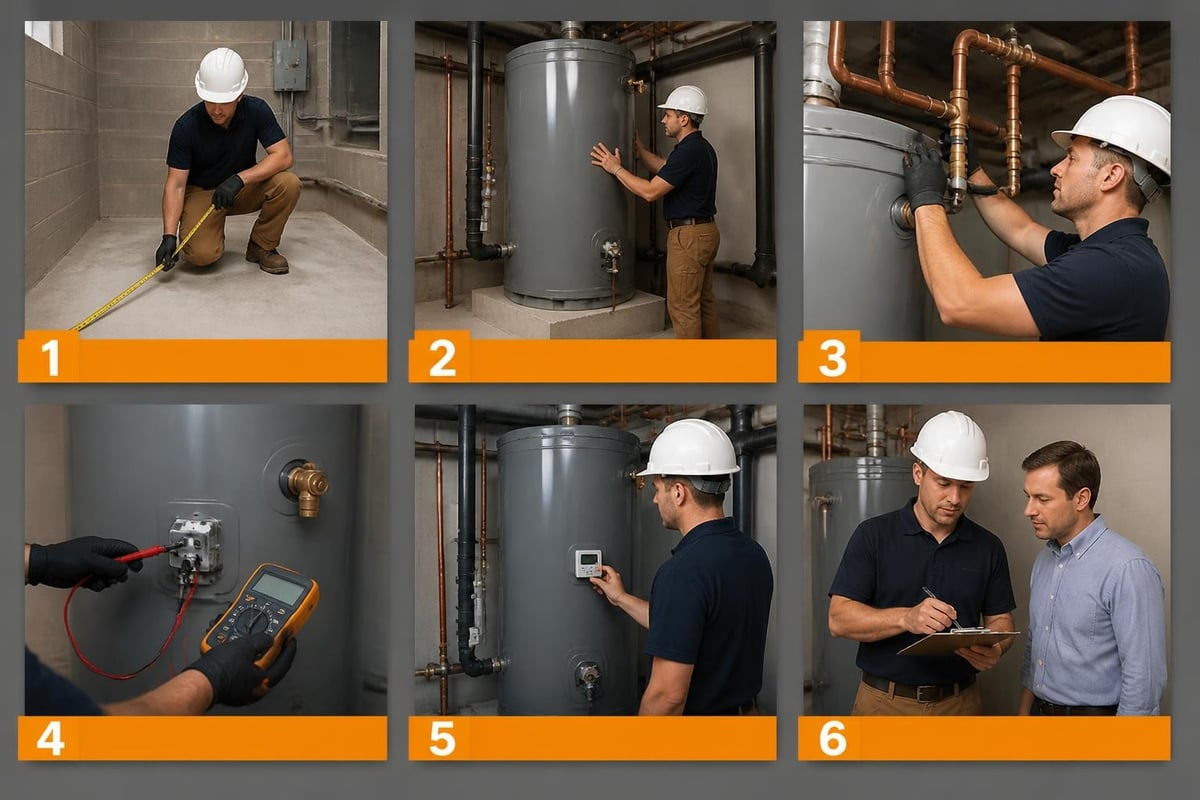
Thorough site assessment identifies potential challenges before work begins. Engineers evaluate structural support, utility connections, ventilation provisions, and access routes for equipment delivery. Large commercial units may require crane lifts or specialist rigging.
Permit Acquisition – Building control notification and any required planning permissions must be secured before installation commences. Gas installations require notification to the local authority building control department.
Utility Coordination – Gas, electrical, and water services may need upgrades. Supply capacity verification prevents post-installation performance issues.
Installation Execution
- Existing System Isolation – Safe shutdown and drainage of old equipment
- Structural Preparation – Floor reinforcement, mounting pads, or support frames
- Equipment Positioning – Precise placement ensuring required clearances
- Utility Connections – Gas, water, and electrical services per manufacturer specifications
- Flue Installation – Proper termination meeting regulations and manufacturer requirements
- Safety Device Installation – Relief valves, expansion vessels, and controls
- Distribution Integration – Connection to existing plumbing infrastructure
Quality Assurance throughout installation prevents costly callbacks. Pressure testing identifies leaks before system commissioning. Flue performance testing ensures safe combustion product removal.
Selecting the right commercial water heater involves considering numerous technical and operational factors that influence installation complexity.
Commissioning and System Optimisation
Proper commissioning transforms installed equipment into an operational system. This critical phase verifies performance, establishes baselines, and ensures occupant safety.
Initial Fill and Purge – Systems are filled slowly, purging air from all pipework. Rapid filling can damage components and trap air pockets that reduce efficiency.
Temperature Calibration – Storage and delivery temperatures are set and verified using calibrated instruments. Thermostatic controls require adjustment to maintain target temperatures under varying loads.
Performance Verification includes:
- Recovery rate testing under load conditions
- Combustion analysis ensuring complete, efficient burning
- Electrical consumption measurement confirming efficiency ratings
- Safety device operation testing (relief valves, high-limit controls)
- Distribution system balancing for even hot water delivery
Documentation and Handover
Comprehensive commissioning documentation provides essential records for ongoing operation and maintenance. Complete installation packages include:
| Document Type | Contents | Purpose |
|---|---|---|
| Installation Certificates | Gas Safe/electrical compliance | Regulatory evidence |
| Commissioning Records | Performance test results | Baseline for maintenance |
| Operation Manuals | System controls and procedures | Staff training reference |
| Maintenance Schedules | Required service intervals | Compliance planning |
| As-Built Drawings | Actual installation configuration | Future reference and modifications |
User Training ensures operational staff understand system controls, emergency procedures, and routine monitoring requirements. This knowledge prevents misuse and identifies developing issues early.
Businesses requiring ongoing support often establish maintenance agreements with installation contractors. Similar arrangements benefit owners of underfloor heating installation and other complex heating systems.
Maintenance Planning and Lifecycle Management
Commercial water heater installation represents a significant capital investment requiring proactive maintenance to achieve expected service life. Typical commercial systems last 10-15 years with proper care, though neglect can halve this lifespan.
Annual Servicing by qualified engineers should include:
- Combustion analysis and burner adjustment
- Heat exchanger inspection and cleaning
- Anode rod replacement (in storage systems)
- Safety valve testing and replacement if necessary
- Control calibration and thermostat verification
- Insulation inspection and repair
Monthly Checks performed by in-house maintenance teams monitor:
- Temperature consistency at sentinel outlets
- Unusual noises indicating scale buildup or component wear
- Visible leaks or corrosion
- Proper operation of circulation pumps
- Energy consumption trends
Water Treatment prevents the most common cause of premature failure. Scale accumulation reduces heat transfer efficiency, increasing energy costs by 20-30% whilst accelerating component degradation. Implementing appropriate treatment extends equipment life and maintains efficiency.
For businesses with sustainable energy systems, integrating water heating with renewable sources requires specialised maintenance protocols ensuring optimal system interaction.
Performance Monitoring and Optimisation
Modern commercial systems incorporate digital controls enabling remote monitoring and predictive maintenance. Smart systems track:
- Real-time energy consumption patterns
- Temperature trends identifying inefficiency
- Operating hours and cycle counts
- Fault codes and diagnostic information
Energy Benchmarking compares actual consumption against design predictions, revealing opportunities for optimisation. Businesses typically see 10-15% energy savings through control refinement and operational adjustments after first-year monitoring.
Regular reviews ensure systems adapt to changing business needs. Facility expansions, operational changes, or new regulations may require capacity upgrades or control modifications. Planning these adjustments maintains reliable service whilst controlling costs.
Cost Considerations and Financial Planning
Commercial water heater installation costs vary significantly based on system type, capacity, fuel source, and site conditions. Understanding the complete financial picture supports informed decision-making.
Initial Investment Breakdown
Equipment Costs range from £2,000 for small electric units to £15,000+ for large commercial gas systems. High-efficiency condensing models command premium pricing but deliver superior long-term value through reduced operating costs.
Installation Labour typically represents 30-50% of total project cost. Complex installations requiring extensive plumbing modifications, structural work, or utility upgrades increase labour requirements significantly.
Ancillary Costs include:
- Building control fees and permits (£500-£1,500)
- Structural engineering consultation (£750-£2,000)
- Utility service upgrades (£1,000-£5,000)
- Disposal of existing equipment (£200-£500)
- Commissioning and certification (£400-£800)
Operating Cost Projections
| System Type | Annual Energy Cost (500L/day) | Maintenance Cost | Expected Lifespan |
|---|---|---|---|
| Standard Gas Storage | £2,400-£3,000 | £350-£500 | 10-12 years |
| Condensing Gas | £1,800-£2,200 | £400-£550 | 12-15 years |
| Electric Storage | £4,500-£5,500 | £250-£400 | 8-10 years |
| Heat Pump | £1,500-£2,000 | £450-£600 | 15-20 years |
Financing Options make substantial installations more accessible. Many businesses spread costs through equipment leasing, energy performance contracts, or financed service agreements. These arrangements often include maintenance, reducing administrative burden whilst ensuring proper care.
Budget-conscious businesses should evaluate total cost of ownership rather than focusing solely on initial investment. A premium high-efficiency system may cost £5,000 more initially but save £800 annually in energy costs, achieving payback within seven years whilst delivering superior performance.
Integration with Existing Building Systems
Modern commercial water heater installation rarely occurs in isolation. Successful projects consider interactions with existing building systems, ensuring harmonious operation and maximised efficiency.
Heating System Coordination – Facilities with both space heating and water heating can benefit from integrated control strategies. Combined systems share resources efficiently, reducing overall energy consumption. Buildings with comprehensive heating services often achieve 15-20% efficiency gains through integrated design.
Building Management Systems – Contemporary commercial buildings incorporate centralised control platforms monitoring all mechanical systems. Water heaters with compatible communication protocols enable:
- Centralised temperature monitoring and adjustment
- Automated scheduling aligned with occupancy patterns
- Energy consumption tracking and reporting
- Fault notification and diagnostics
- Performance benchmarking across multiple sites
Renewable Energy Integration – Solar thermal systems, ground source heat pumps, and biomass boilers can supplement or replace conventional water heating. Hybrid systems utilise renewable sources when available, automatically switching to backup heating during peak demand or adverse conditions.
These integrated approaches align with broader sustainability initiatives. Businesses committed to reducing environmental impact increasingly specify renewable-ready commercial water heater installation, future-proofing their investment against rising energy costs and tightening emissions regulations.
Successful commercial water heater installation requires careful planning, professional execution, and ongoing maintenance to deliver reliable hot water service whilst controlling costs. By understanding system options, sizing requirements, regulatory obligations, and best practices, businesses make informed decisions that support operational needs for years to come. With over four decades of experience delivering comprehensive plumbing and heating solutions across the North East, NU Heat North East Ltd provides expert commercial water heater installation services backed by highly trained technicians and flexible financing options including 0% interest repayment plans to make essential upgrades more accessible for your business.