
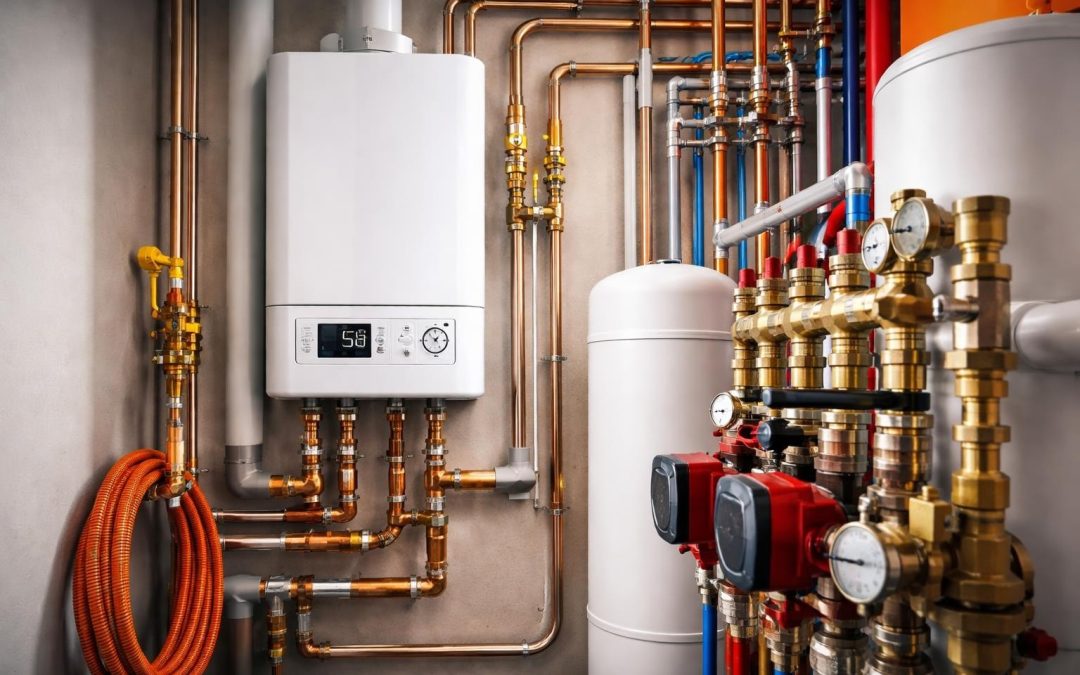
The modern home relies on three interconnected systems that work harmoniously to provide comfort, safety, and functionality. Understanding how plumbing heating and gas services integrate within your property is essential for maintaining a safe and efficient household. Whether you're considering a complete system upgrade, planning routine maintenance, or addressing urgent repairs, comprehensive knowledge of these systems empowers you to make informed decisions about your home's infrastructure.
Understanding the Interconnected Nature of Home Systems
Modern residential properties depend on sophisticated networks that deliver water, warmth, and energy throughout the building. These systems don't operate in isolation but rather function as an integrated network.
Your plumbing system distributes clean water to taps, showers, and appliances whilst safely removing wastewater. The heating system circulates hot water through radiators or underfloor pipes, maintaining comfortable temperatures throughout the year. Gas networks supply fuel to boilers, cookers, and other appliances with remarkable efficiency.
How These Systems Work Together
The integration becomes apparent when you consider a typical combi boiler installation. This single appliance connects to all three systems simultaneously:
- Gas supply provides the fuel source for combustion
- Water supply feeds into the boiler for heating
- Heating circuits distribute the heated water throughout your property
When properly installed and maintained, these connections create a seamless experience. However, any weakness in one system can impact the others, which is why comprehensive understanding of plumbing heating and gas fundamentals proves invaluable for homeowners.
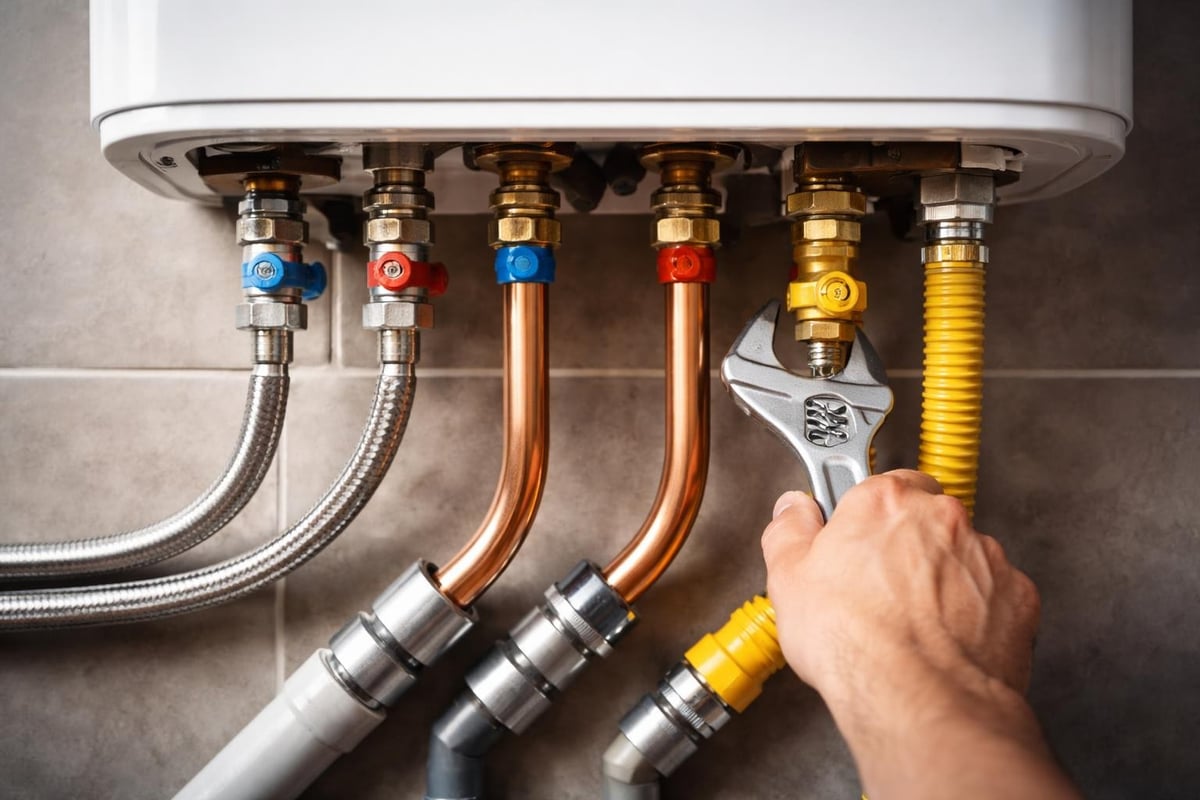
Essential Safety Considerations
Safety must always take precedence when dealing with home utilities. Gas systems, in particular, require strict adherence to regulations and professional handling.
| Safety Aspect | Recommended Action | Frequency |
|---|---|---|
| Gas safety certificate | Professional inspection by Gas Safe registered engineer | Annually |
| Carbon monoxide detector | Test and replace batteries | Monthly/Annually |
| Boiler servicing | Complete system check | Annually |
| Visual leak inspection | Check connections and appliances | Monthly |
| Emergency shut-off familiarity | Know location of gas and water valves | One-time |
Recognizing Warning Signs
Homeowners should remain vigilant for indicators that suggest potential problems. Understanding gas plumbing safety protocols helps you identify issues before they escalate.
Gas-related warning signs include:
- Distinctive sulphurous odour near appliances or pipework
- Yellow or orange flames instead of crisp blue flames on gas hobs
- Excessive condensation on windows when heating is operating
- Black staining or scorch marks around boiler or gas fire
- Physical symptoms such as headaches, dizziness, or nausea
Plumbing and heating indicators:
- Unexplained increases in energy bills
- Inconsistent hot water temperatures
- Strange noises from boiler or pipework
- Visible water leaks or damp patches
- Reduced water pressure throughout the property
Following plumbing safety standards ensures compliance with current regulations whilst protecting your household from potential hazards.
Modern Heating Solutions for 2026
The heating landscape has evolved considerably, with homeowners now enjoying access to diverse technologies that balance efficiency, environmental responsibility, and comfort.
Traditional Gas Boilers
Conventional gas heating remains popular due to its reliability and established infrastructure. Modern condensing boilers achieve efficiency ratings exceeding 90%, recovering heat from flue gases that older models simply wasted.
The latest new boiler systems incorporate smart controls, allowing remote management via smartphone applications. These systems learn your routines, optimising firing patterns to minimise fuel consumption whilst maintaining comfort.
Renewable Heating Technologies
Biomass heating systems have gained traction amongst environmentally conscious homeowners. These systems burn wood pellets, chips, or logs, providing carbon-neutral heating when sourced sustainably. Exploring HETAS biomass options reveals how renewable technologies integrate with existing plumbing heating and gas infrastructure.
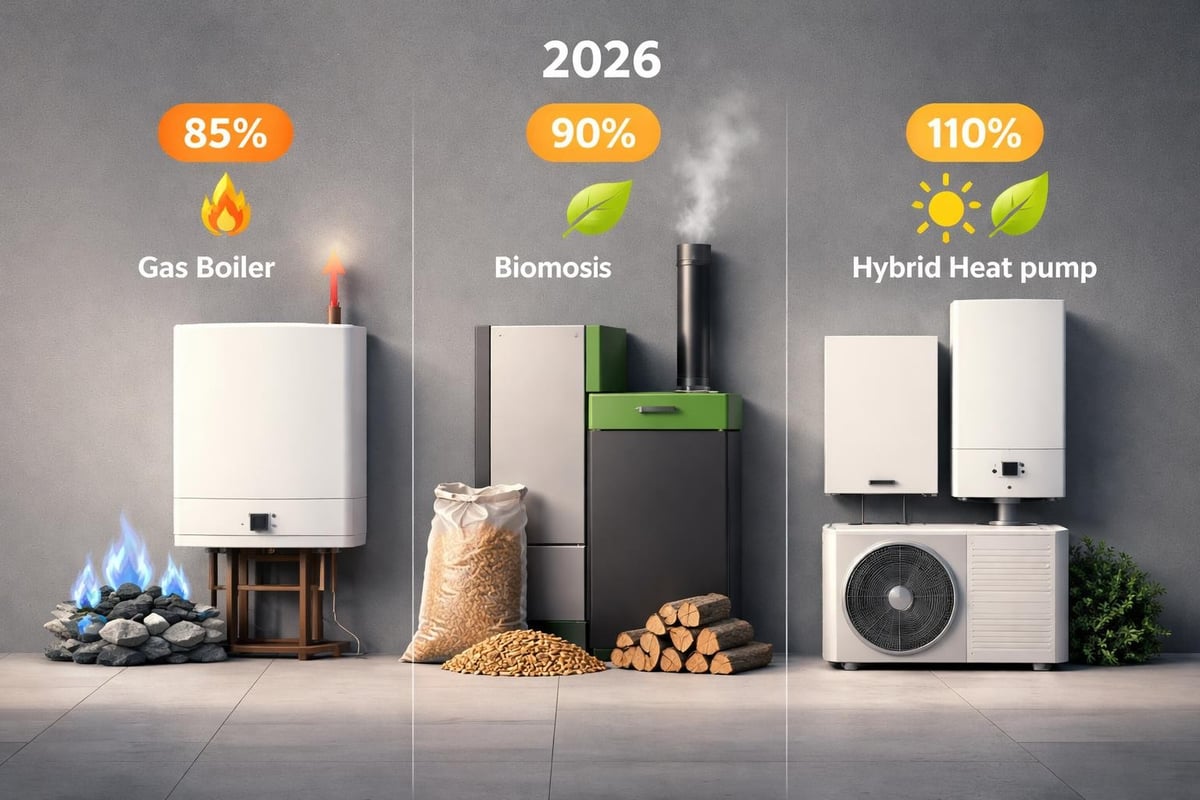
Heat pumps represent another significant advancement, extracting warmth from air or ground sources. Whilst initial investment costs remain higher, operational expenses typically prove lower than conventional gas heating over the system's lifespan.
| Heating System | Efficiency | Installation Cost | Running Cost | Carbon Impact |
|---|---|---|---|---|
| Condensing gas boiler | 90-94% | ££ | £££ | Medium |
| Biomass boiler | 85-92% | ££££ | ££ | Very Low |
| Air source heat pump | 300-400% | ££££ | ££ | Low |
| Ground source heat pump | 400-500% | £££££ | £ | Very Low |
Professional Installation and Maintenance
The complexity of modern plumbing heating and gas systems demands professional expertise. Attempting DIY repairs or installations on gas appliances isn't just inadvisable – it's illegal without proper qualifications.
Choosing Qualified Professionals
Gas Safe registration represents the legal requirement for anyone working on gas appliances in the UK. This register replaced CORGI in 2009 and remains the only legally recognised certification scheme.
When selecting professionals for your home, verify their credentials through the official Gas Safe Register website. Legitimate engineers carry photographic identification cards displaying their registration number and the categories of work they're qualified to perform.
Installation Best Practices
Proper installation forms the foundation of system longevity and safety. Following gas furnace installation safety guidelines ensures optimal performance from day one.
Professional installation encompasses several critical stages:
- System design – Calculating heating requirements and selecting appropriate equipment
- Preparation – Ensuring adequate ventilation, gas supply capacity, and structural support
- Installation – Fitting equipment according to manufacturer specifications and building regulations
- Testing – Comprehensive pressure tests, combustion analysis, and safety device verification
- Documentation – Providing certificates, warranties, and operation guidance
Understanding proper system flush procedures for boilers highlights how thorough preparation prevents future complications.
Maintenance Schedules and Preventive Care
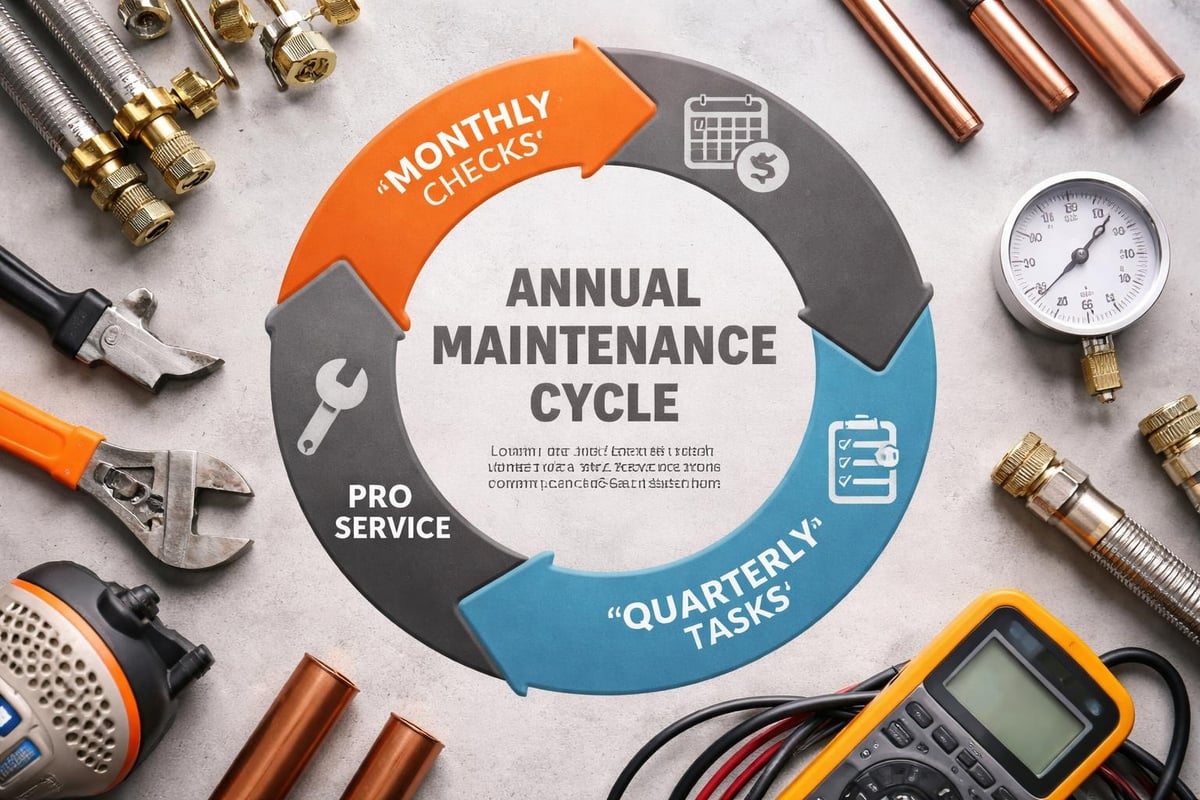
Regular maintenance extends equipment lifespan, maintains efficiency, and prevents costly emergency repairs. Creating a structured maintenance schedule ensures nothing gets overlooked.
Annual Service Requirements
Every plumbing heating and gas system benefits from professional annual servicing. This comprehensive inspection identifies potential issues before they develop into failures.
During a typical boiler service, engineers perform approximately 30-40 individual checks:
- Inspect and clean the heat exchanger
- Test gas pressure and flow rates
- Verify flue integrity and termination
- Examine electrical connections and controls
- Check pump operation and circulation
- Analyse combustion efficiency
- Test safety devices including pressure relief valves
- Inspect for signs of corrosion or deterioration
These essential heating plumbing maintenance tasks should be scheduled before winter when heating demands peak.
Homeowner Responsibilities
Between professional visits, homeowners can perform simple checks that maintain system health:
Monthly tasks:
- Check boiler pressure gauge (typically 1-1.5 bar when cold)
- Test carbon monoxide detectors
- Listen for unusual noises from heating equipment
- Verify adequate ventilation around appliances
Quarterly tasks:
- Bleed radiators if cold spots develop
- Check visible pipework for corrosion or leaks
- Test thermostatic radiator valves operate smoothly
- Inspect flue terminal for blockages
Annual homeowner tasks:
- Review energy consumption patterns
- Clean or replace filters on mechanical ventilation
- Check expansion vessel pressure
- Verify external drain pipes remain clear
Following annual gas line safety checks protects your property and family from potential hazards.
Common Problems and Troubleshooting
Even well-maintained systems occasionally develop issues. Recognising common problems helps you respond appropriately and determine when professional intervention becomes necessary.
Low Pressure Issues
Central heating systems operate within specific pressure ranges. When pressure drops below operational thresholds, boilers typically shut down as a safety measure.
Causes of pressure loss:
- Small leaks in pipework or radiator valves
- Recently bled radiators without repressurising
- Expansion vessel failure
- Pressure relief valve discharge
Most modern boilers feature integrated filling loops allowing homeowners to restore pressure. However, frequent repressurising indicates an underlying leak requiring professional diagnosis. Learning about water in heating systems provides deeper understanding of pressure dynamics.
No Hot Water or Heating
This frustrating situation can stem from numerous sources:
| Symptom | Possible Cause | Action Required |
|---|---|---|
| No heating or hot water | Boiler lockout due to fault | Check error code, call engineer |
| Heating works, no hot water | Diverter valve failure | Professional repair needed |
| Hot water works, no heating | Motorised valve stuck | Professional repair needed |
| Intermittent operation | Thermostat fault | Check settings, replace if necessary |
Strange Noises
Boilers and heating systems shouldn't operate silently, but certain sounds indicate problems:
- Banging or clanking – Limescale build-up on heat exchanger (kettling)
- Gurgling – Air trapped in system or low pressure
- Whistling – Restricted flow through pipework
- Vibrating – Loose components or poor mounting
Understanding comprehensive heating system functions helps contextualise these symptoms.
Energy Efficiency and Cost Management
Rising energy costs make efficiency improvements increasingly valuable. Strategic enhancements to your plumbing heating and gas systems can significantly reduce consumption.
Smart Controls and Automation
Modern heating controls have evolved far beyond simple timers. Contemporary systems offer:
- Room-by-room temperature management
- Weather compensation adjusting output based on outdoor conditions
- Geofencing technology detecting when occupants leave or return
- Usage analytics identifying wasteful patterns
- Voice control integration with smart home ecosystems
These technologies typically deliver 20-30% energy savings through more precise control and reduced wasteful heating.
System Upgrades and Improvements
Several targeted improvements enhance efficiency without complete system replacement:
- Thermostatic radiator valves – Allow independent room temperature control
- Magnetic system filters – Remove circulating debris that reduces efficiency
- Radiator reflector panels – Direct heat into rooms rather than through external walls
- Pipe insulation – Prevents heat loss from distribution pipework
- Smart thermostats – Learn occupancy patterns and optimise heating schedules
Financial Incentives and Financing
The initial cost of system upgrades or replacements can seem daunting. However, various financing options make improvements more accessible in 2026.
Interest-free finance schemes allow spreading costs across manageable monthly payments whilst immediately benefiting from reduced energy bills. Government incentives for renewable heating technologies can offset installation expenses through grants and tax benefits.
Gas Safety Regulations and Compliance
Understanding regulatory frameworks governing plumbing heating and gas systems helps ensure your property remains compliant and safe.
Current Legal Requirements
Landlords face particularly stringent obligations, but homeowners also bear responsibilities regarding gas safety. The Gas Safety (Installation and Use) Regulations 1998 establish the legal framework, updated regularly to reflect evolving best practices.
Key regulatory requirements include:
- Annual gas safety certificates for rental properties
- Gas Safe registered engineers for all gas work
- Adequate ventilation around gas appliances
- Appropriate flue termination locations
- Carbon monoxide detectors in rooms containing gas appliances
Implementing health and safety policies for plumbing and gas work ensures compliance whilst protecting occupants.
Emergency Procedures
Every household member should understand basic emergency responses for gas and water incidents.
In case of suspected gas leak:
- Extinguish naked flames immediately
- Do not operate electrical switches
- Open windows and doors for ventilation
- Turn off gas supply at meter if safe to do so
- Evacuate the property
- Call the national gas emergency number (0800 111 999) from outside
- Do not re-enter until cleared by emergency services
For water emergencies:
- Locate and turn off the main stopcock
- Switch off water heating systems
- Open taps to drain pipework
- Collect water if leaking near electrics
- Move possessions away from affected areas
Following natural gas safety guidelines helps families respond appropriately during emergencies.
Integrating Bathroom Services
Bathroom installations represent significant opportunities to enhance plumbing heating and gas efficiency whilst transforming living spaces. Modern bathroom design considers the entire service infrastructure, not merely aesthetics.
Water Efficiency Technologies
Contemporary bathroom fixtures dramatically reduce water consumption without compromising functionality:
- Low-flow showerheads – Maintain pressure whilst reducing flow by 40-50%
- Dual-flush toilets – Offer appropriate flush volumes for different waste types
- Sensor taps – Eliminate wasteful running whilst hands are soaped
- Thermostatic shower valves – Reduce water waste whilst achieving desired temperature
Heating Integration
Bathroom heating extends beyond the traditional towel rail. Underfloor heating provides luxurious warmth without occupying wall space, whilst modern electric towel rails offer independent control from main heating systems.
When planning bathroom renovations, coordinate with broader heating strategies. Extending existing heating circuits proves more cost-effective during renovation than retrofitting later. Exploring plumbing and central heating integration reveals opportunities for comprehensive improvements.
Future-Proofing Your Home Systems
Technology continues advancing rapidly, and forward-thinking homeowners consider future compatibility when making system decisions in 2026.
Hydrogen-Ready Boilers
The UK government's commitment to achieving net-zero carbon emissions by 2050 includes plans for widespread hydrogen adoption in heating. Many manufacturers now produce "hydrogen-ready" boilers that operate on natural gas but can be converted to burn hydrogen with minimal modification.
Installing hydrogen-ready equipment today protects against premature obsolescence whilst supporting national decarbonisation efforts.
Modular System Design
Flexibility represents another future-proofing strategy. Systems designed with modular components allow incremental upgrades without complete replacement.
For example, installing oversized pipework during initial installation accommodates future heat pump integration. Similarly, smart heating controls update via software rather than requiring hardware replacement.
Professional Guidance
Navigating these complex decisions benefits enormously from professional expertise. Experienced engineers understand how current installations can accommodate future technologies, preventing costly mistakes and ensuring long-term value.
Exploring comprehensive approaches to heating beyond traditional methods reveals emerging opportunities for forward-thinking homeowners.
Regional Considerations for North East England
Geographic location influences plumbing heating and gas system requirements. The North East's climate presents specific challenges and opportunities.
Climate Factors
The region experiences:
- Cold winters requiring robust heating capacity
- Coastal properties facing increased corrosion risk
- Hard water in some areas causing limescale accumulation
- Wind exposure affecting flue performance
These factors influence equipment selection and maintenance requirements. Coastal properties benefit from enhanced corrosion protection, whilst hard water areas require more frequent descaling and may benefit from water softening systems.
Local Regulations and Standards
Building regulations and planning requirements vary across local authorities. North East councils may impose specific requirements regarding renewable energy integration, especially for new builds and significant renovations.
Professional local contractors understand regional requirements, ensuring installations meet all applicable standards without costly rectification work.
Modern homes depend on the seamless integration of plumbing heating and gas systems to deliver comfort, safety, and efficiency. Regular maintenance, professional installation, and informed decision-making protect your investment whilst ensuring reliable operation for years to come. Since 1983, NU Heat North East Ltd has been delivering comprehensive plumbing and heating solutions throughout the North East of England, combining decades of expertise with cutting-edge technology to transform properties across Newbiggin-by-the-Sea and surrounding areas. With 0% interest finance options now available, there's never been a better time to upgrade your home's essential systems with affordable monthly payments and expert installation.