
As 2026 draws near, UK households face mounting pressure from rising energy costs and increasing climate concerns. The need for efficient and sustainable heating has never felt more urgent.
This guide from home heating systems ltd provides expert insights to help you navigate a rapidly changing landscape. We will break down the latest heating system options, regulatory updates for 2026, advances in smart home technology, practical energy-saving tips, and what to look for in a trusted installer.
Discover how to achieve both comfort and savings, and make confident, informed decisions for your home's heating future.
The 2026 Home Heating Landscape: Key Trends and Drivers
As the UK heads toward 2026, the landscape for home heating is shifting rapidly. Homeowners face new challenges and opportunities as costs rise, policies evolve, and technology advances. Understanding these trends is key to making informed decisions for your property. Home heating systems ltd brings you the essential insights shaping the future of domestic comfort.
Energy Prices and the Cost of Heating
Energy prices in the UK have seen significant increases, placing pressure on household budgets. According to recent ONS and BEIS statistics, the average annual heating bill continues to climb, with inflation and global supply chain issues contributing to higher fuel costs. Many families are now seeking ways to manage expenses without sacrificing comfort or efficiency.
Home heating systems ltd recognises that rising prices are driving demand for cost-effective heating solutions. Homeowners are exploring alternative fuels and smart controls to keep their costs in check. Evaluating current and projected energy tariffs can help households plan effectively for 2026.
Decarbonisation and Government Policy
Government policy is a major driver in the evolution of heating systems. The UK has set ambitious 2026 targets for reducing carbon emissions from domestic heating, with a planned phase-out of fossil fuel boilers in new and, eventually, existing homes. Incentives for renewable technologies, such as heat pumps, biomass, and solar thermal, are expanding.
Notably, the UK government increases heat pump funding to £295 million by 2026, making low-carbon upgrades more accessible for many homeowners. Home heating systems ltd guides clients through these policy shifts, ensuring their choices align with both current and future regulations.
Climate Change and Consumer Expectations
Concerns about climate change are reshaping consumer preferences. There is a growing expectation for eco-friendly and low-carbon heating solutions, along with a desire for advanced controls that maximise comfort and minimise waste. More homeowners are seeking systems that reflect their values and help achieve net-zero targets.
Case studies show that homes adopting sustainable technologies can achieve dramatic reductions in emissions. Home heating systems ltd supports clients in selecting options that balance environmental impact with everyday practicality, ensuring systems meet both ethical and operational standards.
Technological Innovation in Heating
Innovation is transforming the way homes are heated. Heat pumps are becoming more efficient, with improved Coefficient of Performance (COP) values and hybrid systems offering flexibility for different properties. Smart thermostats and AI-driven controls allow homeowners to fine-tune their heating, saving energy and costs.
Integration with wider home energy management systems is also on the rise. Home heating systems ltd stays ahead of these developments, advising on the latest technologies that deliver measurable improvements in both comfort and efficiency.
Market Shifts and Installer Skills
The market for heating systems is evolving, with a noticeable shortage of qualified engineers. Upskilling programmes and certification schemes are helping to close the gap, particularly in renewable technologies. Regional disparities remain, with some areas adopting new systems more rapidly than others.
Home heating systems ltd emphasises the importance of working with certified, experienced professionals. This ensures installations are safe, compliant, and tailored to the unique needs of each property, providing peace of mind as the market continues to change.
Types of Home Heating Systems in 2026: Features, Pros & Cons
Choosing the right solution from the range of home heating systems ltd is essential for comfort, cost efficiency, and regulatory compliance in 2026. Each system offers distinct features and trade-offs. Understanding these differences will help you make informed decisions as you adapt to the changing landscape of UK home heating.
Gas, Oil, and LPG Boilers: The Legacy Systems
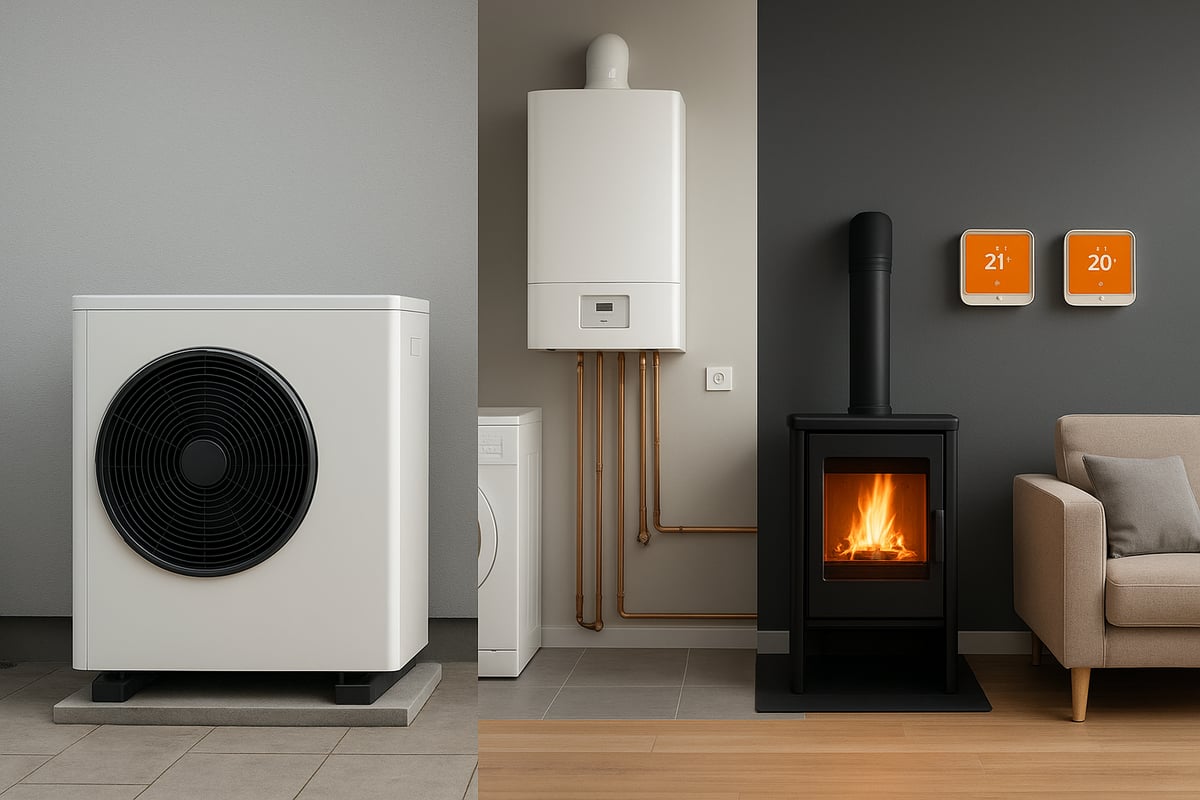
A significant proportion of UK homes still rely on gas, oil, or LPG boilers. Home heating systems ltd often encounters these legacy systems during upgrades or maintenance. While these boilers are familiar and widely available, they face increasing regulatory pressures. Efficiency ratings have improved, yet carbon emissions remain a concern.
Typical running costs for gas boilers are around £800-£1,000 annually, though this varies with energy prices. Recent government decisions have impacted phase-out timelines, so staying informed is crucial. For a deeper exploration, see Types of heating systems UK.
Pros:
- Established technology
- Broad installer base
- Rapid heat delivery
Cons:
- High carbon footprint
- Subject to future restrictions
- Fuel price volatility
Heat Pumps (Air Source, Ground Source, Hybrid)
Heat pumps are fast becoming a central focus for home heating systems ltd in 2026. These systems extract ambient heat from air or ground, offering a sustainable route to low-carbon heating. Air source heat pumps are suitable for most UK homes, while ground source variants require more land.
Heat pumps achieve impressive efficiencies (COP values of 3-4), often reducing annual heating bills compared to fossil fuels. The government continues to offer grants and incentives, supporting rapid adoption. However, heat pumps require proper sizing and insulation to deliver optimal results.
Pros:
- Significant carbon savings
- Lower running costs with renewables
- Eligible for grants
Cons:
- Higher upfront installation costs
- Installation complexity for some properties
- May need supplementary heat in extreme cold
Biomass and Renewable Heating Solutions
Biomass boilers, wood-burning stoves, and solar thermal systems are growing in popularity with environmentally conscious customers of home heating systems ltd. Biomass boilers burn wood pellets or chips, providing heat and hot water. Solar thermal panels supplement domestic hot water, especially in summer.
Financial support, such as the Renewable Heat Incentive, has made these systems more accessible. However, maintenance and storage requirements can be challenging for some homeowners. Biomass is considered carbon-neutral when fuel is sourced sustainably.
Pros:
- Renewable and locally sourced fuels
- Potential for lower long-term costs
- Can help homes reach net zero
Cons:
- Regular maintenance needed
- Fuel storage space required
- Particulate emissions if poorly managed
Electric Heating: Panel, Storage, and Infrared
Electric heating systems offer flexible options for home heating systems ltd clients, especially in properties off the gas grid. Modern panel heaters, storage heaters, and infrared panels are easy to install and require minimal maintenance.
Smart controls and off-peak tariffs can help manage running costs. However, electricity prices are generally higher than gas, so efficiency and usage patterns are key. Electric heating produces no emissions at the point of use, aligning with the shift to a cleaner grid.
Pros:
- Simple installation
- No flue or pipework needed
- Compatible with renewables
Cons:
- Higher operating costs in most cases
- Can increase grid demand
- May not suit larger properties
District Heating and Community Energy Schemes
District heating systems distribute heat from a central source to multiple homes via insulated pipes. Home heating systems ltd supports these schemes in urban developments and new-build projects. District heating can use waste heat, biomass, or even geothermal energy.
Shared infrastructure lowers individual maintenance, and local energy generation reduces transmission losses. However, coverage is limited in the UK, and upfront investment is substantial. Homeowners must also consider long-term contracts with heat providers.
Pros:
- Efficient for dense communities
- Lower carbon with renewable sources
- Reduced in-home servicing
Cons:
- Geographical limitations
- High initial infrastructure cost
- Less control over heat source
Comparative Table: System Lifespan, Running Costs, and Carbon Impact
To help you compare home heating systems ltd options, here’s a summary based on typical UK data:
| System | Lifespan (years) | Avg Annual Cost | Carbon (kg CO₂/kWh) |
|---|---|---|---|
| Gas Boiler | 12-15 | £900 | 0.21 |
| Heat Pump | 15-20 | £650 | 0.05 |
| Biomass | 15-20 | £700 | 0.02 |
| Electric | 10-15 | £1,100 | 0.09 (grid avg) |
| District | 20+ | £750 | Variable |
Selecting the right system from home heating systems ltd involves balancing upfront costs, energy bills, and environmental impact. Consider your property type, future regulations, and available grants when making your choice.
Smart Home Integration and Digital Controls for Heating
Smart home integration is rapidly transforming how UK households manage comfort and energy efficiency. As technology evolves, homeowners working with home heating systems ltd are discovering new ways to control, monitor, and optimise their heating for 2026 and beyond.

The Rise of Smart Thermostats and Zoning
Smart thermostats have become a hallmark of advanced home heating systems ltd installations. These devices learn your schedule, adapt to your routines, and optimise comfort without constant manual adjustment. Leading brands offer features such as learning algorithms and geo-fencing, which detect when you are home or away.
Zoning technology allows you to heat only the rooms in use, reducing unnecessary energy consumption. By dividing your home into distinct heating zones, you can tailor temperatures for bedrooms, living areas, or offices. This targeted approach helps households achieve significant savings while maintaining comfort throughout the year.
Remote Monitoring and Automation
Remote monitoring is now a standard expectation for homeowners using home heating systems ltd. With dedicated smartphone apps, you can control your heating from anywhere, whether you are at work or on holiday. Scheduling tools make it easy to set temperature presets and adapt heating to your daily routine.
Integration with voice assistants, like Alexa or Google Home, adds an extra layer of convenience. You can adjust settings hands-free, check the status of your system, or activate holiday modes with a simple voice command. This level of automation streamlines home management and provides peace of mind for busy families.
Data Analytics and Energy Optimisation
Modern systems from home heating systems ltd leverage data analytics to drive energy savings. These controls track your usage patterns, identify inefficiencies, and suggest adjustments to reduce consumption. AI-driven recommendations help you find the optimal balance between comfort and cost.
For example, a typical UK home using smart controls has reported up to 15% annual heating bill reductions. By monitoring daily habits and responding to real-time feedback, homeowners can make informed decisions that directly impact their household budget.
Security and Data Privacy Considerations
As digital heating controls become more prevalent, security is a top priority for home heating systems ltd. Protecting personal data requires robust encryption, secure installation practices, and regular software updates.
To safeguard your system, consider these best practices:
- Use strong, unique passwords for your smart apps.
- Enable two-factor authentication where available.
- Keep your devices updated with the latest firmware.
- Work with certified professionals for installation.
By following these steps, you can enjoy the benefits of smart heating without compromising your privacy.
Future-Proofing: Compatibility with Emerging Tech
Looking ahead, home heating systems ltd is focused on ensuring your heating setup remains compatible with new technologies. Future-proofing means preparing for seamless integration with home batteries, EV chargers, and solar PV systems.
Choosing open protocols over proprietary systems can help maximise compatibility as technology advances. Upgrading to digital controls is also a smart step, and for guidance on the latest options, explore central heating system upgrades to keep your home ready for the future.
By investing in adaptable solutions now, you position your home for comfort, efficiency, and regulatory compliance in 2026 and beyond.
Energy Efficiency, Insulation, and Reducing Heating Bills
Improving the energy efficiency of your home is one of the most effective ways to reduce heating bills and carbon emissions. For homeowners partnering with home heating systems ltd, optimising your property can deliver immediate comfort and long-term savings.

The Role of Insulation and Building Fabric
Effective insulation is the foundation of a cost-efficient home. Home heating systems ltd recommends focusing on areas like lofts, cavity walls, and floors to minimise heat loss.
- Loft insulation can save up to £285 per year on heating bills.
- Cavity wall insulation typically reduces annual costs by around £180.
- Draught-proofing and double glazing further decrease energy demand.
By improving your home's building fabric, you make every unit of heat from home heating systems ltd work harder, keeping warmth in and bills lower.
System Upgrades and Maintenance
Keeping your heating system in prime condition is crucial for efficiency. Home heating systems ltd advises annual servicing for boilers and heat pumps to maintain performance.
- Power flushing removes sludge from radiators.
- System balancing ensures even heat distribution.
- Upgrading to smart controls or thermostatic radiator valves can enhance efficiency.
For detailed advice on keeping your boiler running smoothly and avoiding costly breakdowns, see this boiler repair and servicing guide. Regular maintenance with home heating systems ltd not only extends equipment lifespan but also safeguards your investment.
Behavioural Changes for Lower Bills
Small changes in daily routines can make a significant difference. Home heating systems ltd encourages homeowners to:
- Lower the thermostat by 1°C to save up to 10% on bills.
- Use programmable schedules to avoid heating empty rooms.
- Monitor energy use with smart meters for real-time feedback.
Adopting these habits helps you get the most from home heating systems ltd, cutting costs without sacrificing comfort.
Grants, Loans, and Government Support
Financial support is available to help households upgrade efficiency. Home heating systems ltd stays updated on current schemes such as the Green Homes Grant and Energy Company Obligation (ECO).
- Check eligibility for insulation or heating system grants.
- Explore interest-free loans for energy upgrades.
- Apply early, as funds are often limited.
By combining these incentives with expertise from home heating systems ltd, you can make cost-effective improvements that pay for themselves over time.
Monitoring and Measuring Success
Tracking your progress is key to sustaining savings. Home heating systems ltd recommends using energy monitoring tools to set and review personal targets.
| Tool | Function | Example Saving |
|---|---|---|
| Smart meters | Real-time usage data | £30-£50/year |
| Heating apps | Schedule optimisation | £50-£100/year |
| Thermal imaging | Spotting heat loss | Up to £100/year |
Measuring your results ensures you continue to benefit from the expertise of home heating systems ltd and adapt to new energy challenges.
Choosing and Working with a Home Heating Installer
Selecting the right installer is crucial for any homeowner upgrading or replacing their heating system. With new regulations, evolving technology, and a growing focus on sustainability, working with a trusted provider like home heating systems ltd ensures both compliance and long-term performance.
Qualifications and Certification Schemes
Always verify that your installer holds the necessary certifications. Look for accreditations such as Gas Safe for gas systems, MCS for renewables, HETAS for biomass, and OFTEC for oil. These credentials demonstrate that the installer is trained to meet UK safety and performance standards.
Using a certified professional from home heating systems ltd guarantees that your system will be installed efficiently, safely, and in line with all current regulations. This is not just about compliance, but also about protecting your investment and ensuring warranty validity.
Getting Quotes and Comparing Options
It is wise to obtain multiple quotes before making a decision. Request detailed, written estimates that include the cost of equipment, installation, any additional works, and aftercare. Home heating systems ltd recommends that you carefully compare what is covered in each quote.
A typical quote should specify the type of system, brand, efficiency rating, warranty terms, and expected running costs. For example, a new gas boiler may range from £2,500 to £4,000 installed, while a heat pump could cost between £7,000 and £13,000, depending on property size and requirements.
Project Planning and Timelines
A reliable installer will guide you through every stage, from the initial survey to final commissioning. The process with home heating systems ltd usually begins with an assessment of your property’s needs and a discussion of suitable systems. Once you choose a solution, your installer will schedule the work, order equipment, and prepare your home.
Installation timelines vary: a straightforward boiler swap may take one to two days, while a full heat pump installation might require up to a week. Your installer will also manage any disruption and ensure your home is left clean and tidy.
Maintenance Contracts and Aftercare
Ongoing maintenance is vital for the longevity and efficiency of your heating system. Many providers, including home heating systems ltd, offer maintenance contracts that cover annual servicing, emergency call-outs, and parts replacement. These agreements help prevent breakdowns and maintain manufacturer warranties.
When choosing a contract, consider what is included: does it cover labour, parts, and response time? A good contract provides peace of mind, ensuring any issues are dealt with promptly by qualified engineers.
Customer Reviews and Red Flags
Before committing, check independent review platforms for feedback on your chosen installer. Platforms like Which? Trusted Traders offer verified customer experiences. Be cautious of installers who offer unusually low prices, lack proper documentation, or rush the quoting process.
Home heating systems ltd advises looking for consistent positive reviews, clear communication, and transparency in pricing. Warning signs include evasive answers, vague quotes, or reluctance to provide references.
Choosing a Local Expert: Nu-Heat North East Ltd
For homeowners in the North East of England, Nu-Heat North East Ltd stands out as a trusted choice. With over 40 years of experience, their team is accredited for gas, oil, LPG, biomass, and underfloor heating. They specialise in renewable solutions and offer 0 percent finance options for affordable upgrades.
Their transparent quoting process and commitment to customer satisfaction set them apart. To explore the latest renewable energy heating options, Nu-Heat North East Ltd provides tailored advice and installations that align with the highest industry standards.
Preparing for the Future: Heating System Upgrades and Home Value
Upgrading your home’s heating can significantly boost property value. Modern systems, such as heat pumps and smart controls, often improve your EPC rating. Buyers are increasingly searching for homes with efficient, low-carbon heating, making these features a strong selling point. For those considering a move, investing in sustainable solutions now can set your property apart in a competitive market.
The Impact of Modern Heating on Property Value
Energy-efficient heating systems directly influence a home’s desirability. Prospective buyers often use EPC ratings to assess running costs and environmental impact. By choosing home heating systems ltd for upgrades, you ensure your property stands out for both efficiency and comfort.
- Higher EPC ratings can raise sale prices.
- Smart and renewable systems attract eco-conscious buyers.
- Modern heating is a key differentiator in today’s property market.
Planning for Regulatory Changes
Staying ahead of evolving regulations is vital. The government’s approach to fossil fuel heating has shifted, with updates such as the UK government scraps plan to ban sale of gas boilers by 2035 impacting future choices. Upgrading early with home heating systems ltd helps avoid last-minute costs and ensures compliance with any future standards.
- Monitor policy updates closely.
- Consider future-proof systems like heat pumps.
- Avoid costly retrofits by acting now.
Long-Term Savings and Payback Periods
Investing in a modern heating system brings measurable savings. Government initiatives aim to reduce household bills, as seen in efforts to UK to cut household energy bills by £150 a year. Calculating ROI helps homeowners make informed decisions.
| System Type | Typical Payback (years) | Average Annual Savings (£) |
|---|---|---|
| Heat Pump | 7-10 | 300-500 |
| High-Efficiency Boiler | 5-7 | 200-300 |
| Solar Thermal | 10-15 | 100-200 |
With home heating systems ltd, you can evaluate options for the best return on your investment.
Environmental and Lifestyle Benefits
Upgrading your system reduces your carbon footprint and enhances indoor comfort. Features such as smart controls let you manage heating with precision, improving convenience. Lower emissions benefit both your household and the wider community.
- Achieve net-zero heating at home.
- Enjoy tailored comfort and easy controls.
- Contribute to a greener future.
Resources for Further Information
Stay informed with trusted resources. The Energy Saving Trust, Which?, and GOV.UK offer up-to-date advice on grants, regulations, and installer directories. For tailored guidance, home heating systems ltd provides expert insights to help you navigate every step of your upgrade journey.