
Electric boilers have become increasingly popular in the UK as homeowners seek cleaner, more efficient heating solutions. With advancements in technology and a growing focus on reducing carbon emissions, understanding how to choose the best electric boiler for your property has never been more important. This comprehensive guide explores everything you need to know about electric heating systems, from efficiency ratings to installation considerations, helping you make an informed decision for your home in 2026.
Understanding Electric Boiler Technology
Electric boilers operate fundamentally differently from traditional gas or oil systems. Rather than burning fossil fuels to generate heat, they use electricity to warm water that circulates through your radiators and taps. This process eliminates the need for flue systems and dramatically reduces local emissions.
The technology behind modern electric boilers has evolved significantly. According to research on energy efficiency in autonomous heat supply systems, electric boilers can achieve impressive performance levels when properly matched to property requirements. These systems work particularly well in smaller properties or those without access to mains gas.
Key Components and Operation
Every electric boiler contains several essential elements that work together to provide heating and hot water:
- Heating elements that convert electrical energy into thermal energy
- Flow and temperature sensors for precise control
- Expansion vessels to manage pressure fluctuations
- Control systems that optimize performance based on demand
- Safety mechanisms including overheat protection and pressure relief valves
The simplicity of electric boiler design means fewer moving parts compared to combustion boilers. This translates to reduced maintenance requirements and potentially longer service life. Many homeowners find that their heating system operates more quietly with electric technology.
Efficiency and Running Costs
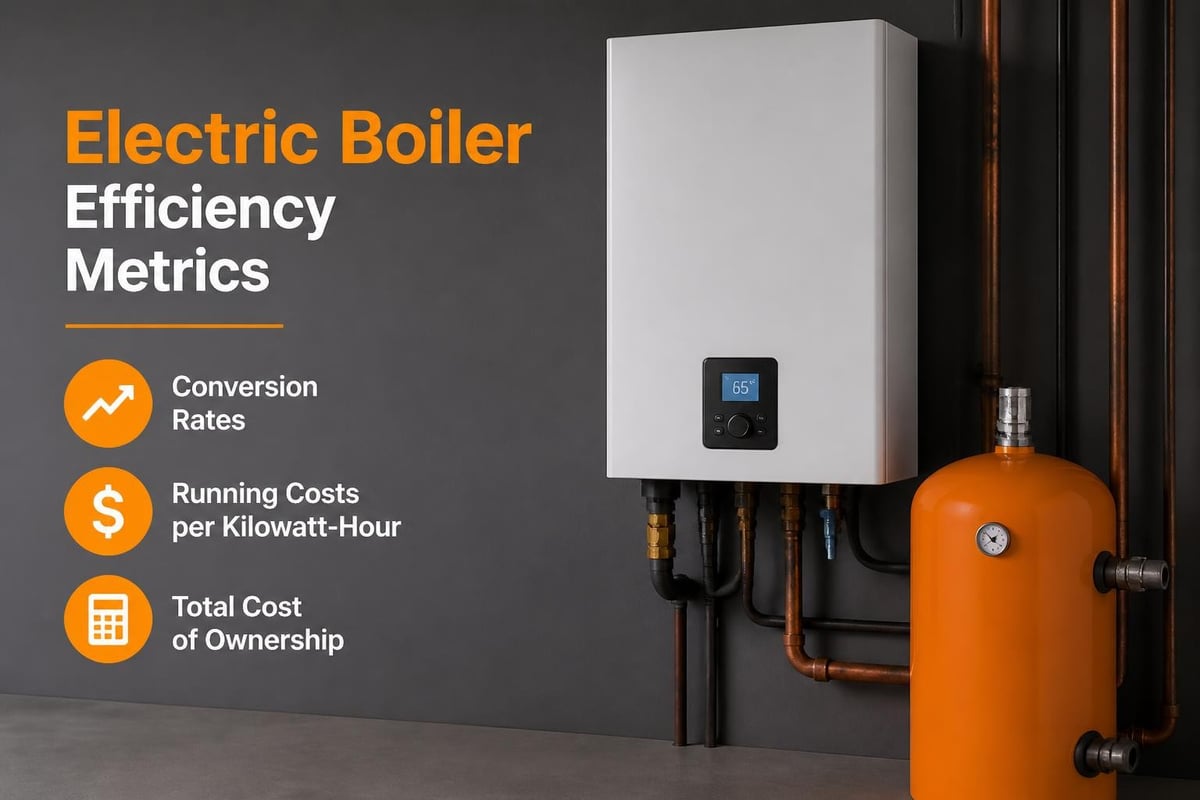
When evaluating the best electric boiler options, efficiency stands as a critical consideration. Electric boilers convert nearly 100% of the electrical energy they consume into heat, making them exceptionally efficient at the point of use. However, the overall environmental and financial picture depends on electricity generation sources and tariff structures.
Performance Metrics
Modern electric boilers demonstrate remarkable efficiency characteristics. The ASHRAE Handbook provides detailed technical standards for measuring boiler performance, establishing benchmarks that help consumers compare different models.
| Efficiency Factor | Electric Boiler | Gas Boiler | Oil Boiler |
|---|---|---|---|
| Point-of-use efficiency | 99-100% | 89-95% | 85-93% |
| Heat loss through flue | None | 5-11% | 7-15% |
| Standby energy consumption | Minimal | Moderate | Moderate |
| Responsiveness | Instant | Delayed | Delayed |
The running costs for electric heating depend heavily on your electricity tariff. Homes with solar panels, battery storage, or Economy 7 tariffs can achieve significant savings. Time-of-use tariffs allow you to heat water during off-peak hours, storing thermal energy for later use.
Optimizing Operating Costs
Strategic approaches to managing your electric boiler can substantially reduce expenses:
- Install a modern programmer with seven-day scheduling capabilities
- Utilize off-peak electricity rates for heating water
- Ensure excellent insulation throughout your property
- Consider hybrid systems that supplement electric heating
- Regular servicing to maintain peak efficiency
Recent advances in machine learning for boiler control optimization demonstrate how smart technology can further enhance efficiency. These systems learn your household patterns and adjust heating schedules automatically, minimizing waste whilst maintaining comfort.
Choosing the Right Size and Type
Selecting the best electric boiler begins with accurately assessing your property's heating requirements. An undersized unit will struggle to meet demand, whilst an oversized system wastes energy and increases installation costs unnecessarily.
Calculating Your Requirements
Professional heating engineers calculate boiler capacity based on multiple factors. Your property's size, insulation quality, number of radiators, and hot water needs all influence the decision. A typical three-bedroom semi-detached house in the North East might require a 9-12 kW electric boiler, whilst larger properties may need 15 kW or more.
Consider these property characteristics when sizing your system:
- Total floor area and ceiling heights
- Number of bathrooms and occupants
- Quality of wall, loft, and floor insulation
- Single or double glazing throughout
- Geographic location and exposure to elements
- Existing radiator sizes and configurations
Modern electric boiler guides provide comprehensive sizing calculators, but professional assessment ensures optimal results. The team at NU Heat North East Ltd has decades of experience matching boilers to property requirements across the North East.
Types of Electric Boilers
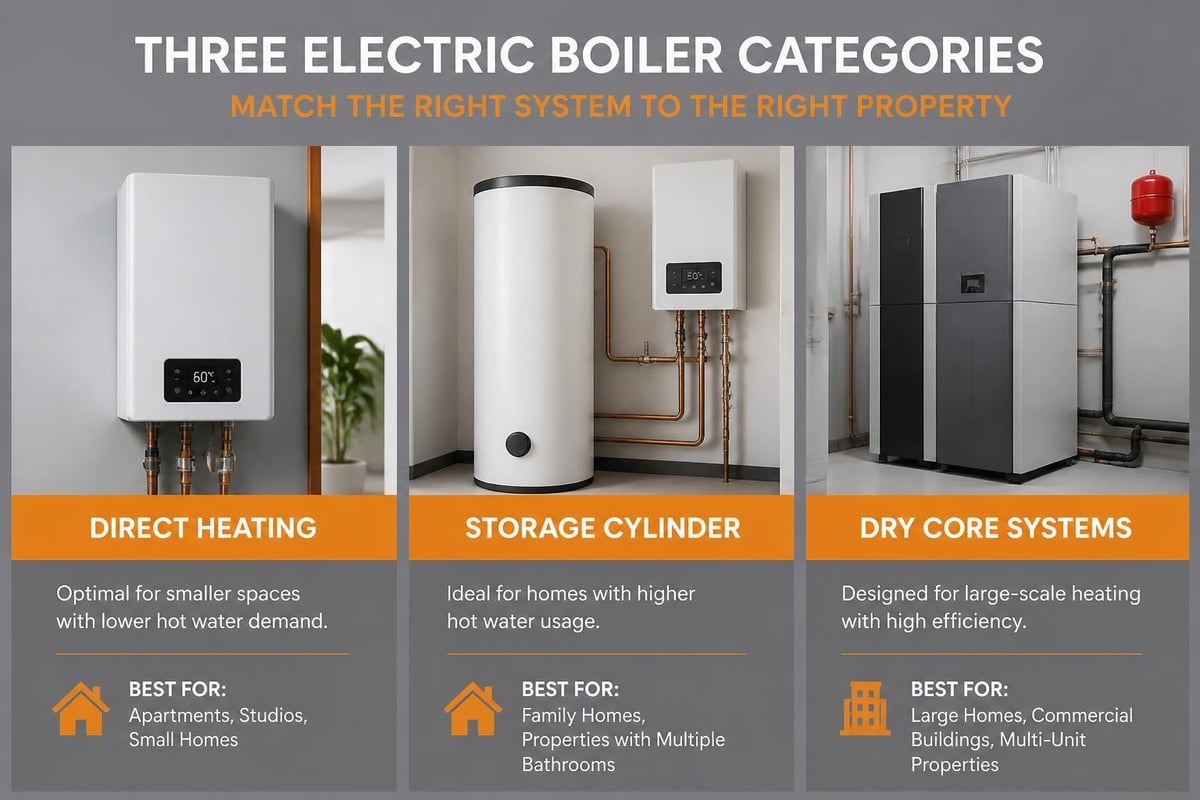
Electric boilers come in several configurations, each suited to different applications:
Direct electric boilers heat water on demand as it passes through the unit. These compact systems work well for smaller properties with modest heating requirements. They require no storage cylinder, saving valuable space in compact homes.
Storage electric boilers heat water during off-peak periods and store it in insulated cylinders. This approach maximizes savings for households on time-of-use tariffs. The stored hot water remains available throughout the day, even during peak-rate hours.
Dry core storage systems use electricity to heat ceramic bricks rather than water directly. These bricks retain heat for extended periods, releasing it gradually through the day. Such systems offer exceptional efficiency for homes with predictable heating patterns.
Installation Considerations
Installing the best electric boiler involves more than simply mounting the unit and connecting pipes. Proper installation requires careful planning, appropriate electrical infrastructure, and compliance with building regulations throughout the process.
Electrical Requirements
Electric boilers demand substantial electrical capacity. A typical residential unit requires a dedicated circuit rated for 40-60 amps, significantly exceeding standard household circuits. Your consumer unit must have sufficient capacity, and the incoming supply from your distribution network operator needs adequate rating.
Before installation, qualified electricians must verify:
- Incoming supply capacity and earthing arrangements
- Consumer unit condition and available circuit spaces
- Cable routes from consumer unit to boiler location
- Bonding requirements for water and gas services
- RCD protection for the dedicated boiler circuit
Properties with older electrical installations may require upgrades before accommodating an electric boiler. This additional work increases upfront costs but ensures safe, compliant operation for years ahead. Some installations benefit from three-phase electrical supplies, particularly in larger properties with higher heating demands.
Location and Space Planning
Electric boilers offer remarkable flexibility regarding installation location. Without flue requirements, you can position them almost anywhere with suitable electrical and plumbing connections. Common locations include kitchen cupboards, utility rooms, or purpose-built plant rooms.
| Installation Location | Advantages | Considerations |
|---|---|---|
| Kitchen cupboard | Accessible for controls, central location | Space constraints, aesthetics |
| Utility room | Dedicated space, noise isolation | Pipe run lengths, heating loss |
| Loft space | Frees ground floor space | Access for maintenance, cold environment |
| Garage | Separate from living areas | Frost protection requirements |
Modern electric boilers operate almost silently, making them suitable for installation near living spaces. However, the associated pumps and controls may produce some operational noise. For underfloor heating systems, careful planning ensures optimal heat distribution throughout the property.
Features of Leading Electric Boilers
The best electric boiler models in 2026 incorporate sophisticated features that enhance performance, reliability, and user experience. Understanding these capabilities helps you distinguish premium systems from basic alternatives.
Smart Control Systems
Contemporary electric boilers feature advanced control interfaces that provide unprecedented heating management. WiFi connectivity allows remote operation via smartphone applications, enabling you to adjust settings whilst away from home. These systems integrate seamlessly with smart home platforms, coordinating heating with other automated systems.
Voice control through popular assistants offers hands-free operation. Geofencing technology detects when you leave or approach home, automatically adjusting heating schedules to optimize comfort and efficiency. Learning algorithms observe your behaviour patterns, making intelligent predictions about when heating will be required.
Recent developments in distributionally robust scheduling for electrified heating demonstrate how advanced algorithms can optimize boiler operation even with uncertain demand patterns. These innovations help households minimize running costs whilst maintaining consistent comfort levels.
Modulation and Load Management
Premium electric boilers feature modulating elements that adjust output to match real-time demand precisely. Rather than simple on-off operation, these systems vary power consumption smoothly, reducing temperature fluctuations and energy waste. This capability proves particularly valuable in properties with varying occupancy patterns.
Load management systems prevent electrical supply overload by coordinating boiler operation with other high-consumption appliances. When your electric vehicle charges or oven operates, the boiler may temporarily reduce output, preventing circuit overload whilst maintaining adequate heating.
Weather Compensation Technology
External temperature sensors enable weather compensation, automatically adjusting heating output based on outdoor conditions. On mild days, the system reduces flow temperatures, saving energy without compromising comfort. During cold snaps, it increases output proactively, maintaining warmth despite challenging conditions.
This technology works particularly effectively when combined with:
- OpenTherm communication protocols for precise control
- Self-learning algorithms that optimize performance over time
- Room-by-room zoning through thermostatic radiator valves
- Hot water priority systems for consistent domestic supply
Maintenance and Longevity
Electric boilers require considerably less maintenance than combustion alternatives, but regular attention ensures optimal performance and maximum lifespan. Understanding maintenance requirements helps you budget appropriately and avoid unexpected failures.
Annual Servicing Requirements
Whilst electric boilers don't need annual gas safety checks, professional servicing remains advisable. Qualified technicians inspect electrical connections, test safety devices, verify pressure settings, and check for any wear or deterioration. This preventive approach identifies potential issues before they cause breakdowns.
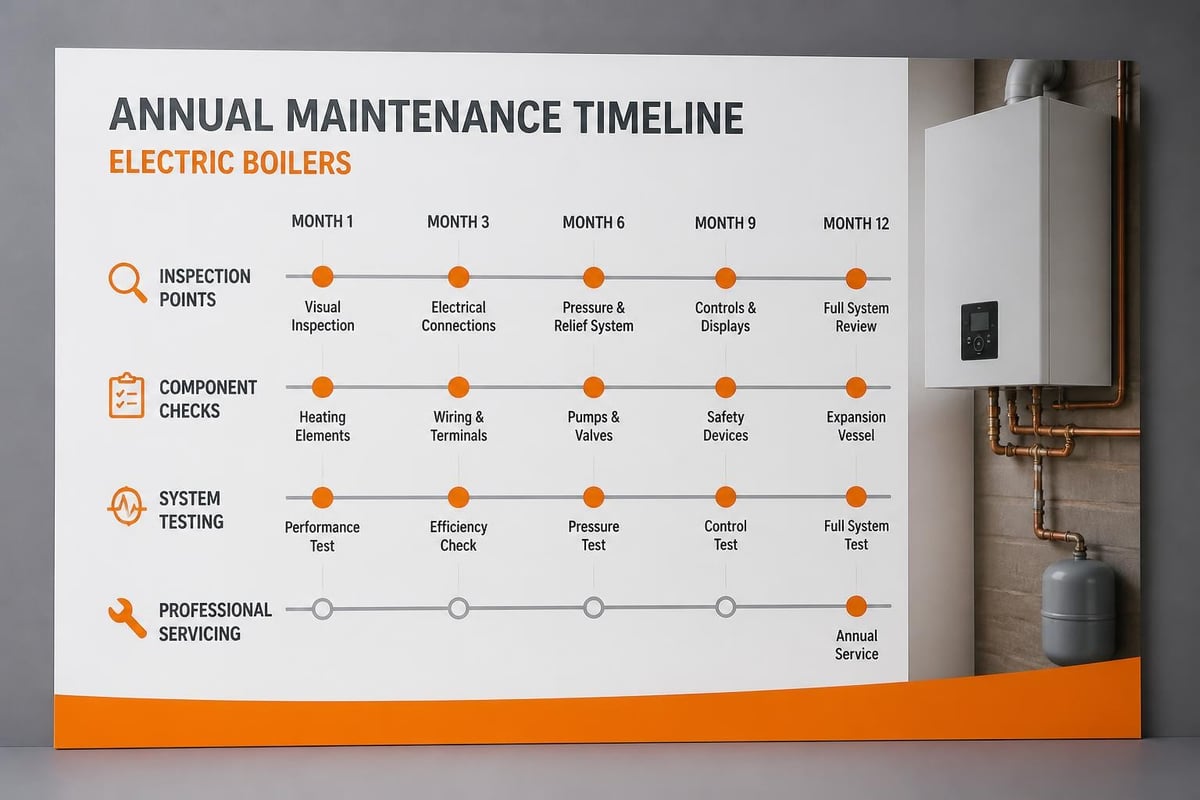
A comprehensive service typically includes:
- Electrical connection tightness verification
- Heating element condition assessment
- Pressure vessel and expansion system checks
- Control system function testing
- Water quality analysis and treatment
- Performance efficiency measurements
Properties with hard water may require additional attention to prevent limescale accumulation. Installing a water softener or magnetic scale inhibitor protects heating elements and extends system life. Regular system flushing removes sediment and maintains heat transfer efficiency.
Expected Lifespan and Warranties
Quality electric boilers typically operate reliably for 15-25 years, often outlasting gas alternatives. The absence of combustion processes eliminates many common failure modes associated with traditional boilers. Heating elements, the most wear-prone component, can be replaced relatively inexpensively when necessary.
Manufacturer warranties vary significantly between brands and models. Standard coverage ranges from two to five years, with premium models offering extended warranties reaching ten years. Some manufacturers provide separate warranties for different components, reflecting their varying expected lifespans.
Environmental and Regulatory Factors
Choosing the best electric boiler increasingly involves considering environmental impact alongside performance and cost. As the UK electricity grid incorporates more renewable generation, electric heating becomes progressively cleaner.
Carbon Emissions Trajectory
The carbon intensity of UK electricity has fallen dramatically over recent years. In 2026, with substantial wind, solar, and nuclear generation, electric heating produces significantly lower emissions than even a decade ago. This trend continues as fossil fuel generation phases out.
Future-proofing your heating system means considering the entire ownership period. An electric boiler installed today will operate throughout decades of continuing grid decarbonization. Research on flexibility planning for integrated energy systems explores how electric heating can support grid stability whilst reducing emissions.
Building Regulations Compliance
All boiler installations must comply with current building regulations, particularly Part L covering conservation of fuel and power. Electric boilers meet these requirements readily when properly sized and installed. Their high efficiency satisfies performance standards without additional measures.
Planning for future regulations helps protect your investment. The UK government's commitment to phasing out fossil fuel heating makes electric systems increasingly attractive. Properties equipped with electric boilers may achieve higher Energy Performance Certificate ratings, potentially increasing market value.
Integration with Renewable Technologies
The best electric boiler installations increasingly incorporate renewable energy technologies, creating highly efficient, low-carbon heating systems. Solar panels, heat pumps, and battery storage complement electric boilers beautifully.
Solar Photovoltaic Synergy
Homes with solar panels can power electric boilers using self-generated electricity, dramatically reducing running costs. Intelligent diverters redirect surplus solar generation to heat water rather than exporting it to the grid. This approach maximizes the value of your solar investment whilst providing free hot water during sunny periods.
Battery storage systems extend the benefits beyond daylight hours. Excess solar energy charges batteries during the day, then powers the boiler during evening and morning peaks. This strategy minimizes grid electricity consumption whilst optimizing renewable energy utilization.
Hybrid System Configurations
Some installations combine electric boilers with complementary heating technologies. Air source heat pumps might provide baseline heating economically, with the electric boiler supplementing during peak demand or extremely cold weather. This hybrid approach balances efficiency with responsiveness.
The quality of water in heating systems affects all components, requiring careful management in hybrid configurations. Proper water treatment prevents corrosion and scale formation across multiple heating technologies.
Financial Incentives and Support
Installing the best electric boiler involves significant upfront investment, but various financial mechanisms help manage costs. Understanding available support enables you to plan your installation budget effectively.
Government Schemes and Grants
The UK government offers several schemes supporting low-carbon heating transitions. The Boiler Upgrade Scheme provides grants for certain renewable heating systems, though pure electric boilers typically aren't eligible. However, hybrid systems incorporating heat pumps alongside electric boilers may qualify.
Local authorities occasionally run regional initiatives supporting heating upgrades, particularly in fuel poverty areas. The North East has historically benefitted from such programmes, making it worthwhile investigating current opportunities before proceeding with installation.
Financing Options
Many heating specialists offer financing arrangements that spread installation costs over manageable monthly payments. Interest-free credit periods make electric boiler upgrades accessible without depleting savings. These arrangements typically require credit checks and may involve arrangement fees.
Some energy suppliers provide boiler installation packages with repayment through energy bills. Whilst convenient, carefully compare total costs against independent installation quotes to ensure value. Professional advice from experienced installers helps you navigate these options effectively.
Selecting Your Installation Partner
Choosing the right professional to install your electric boiler significantly impacts system performance, reliability, and longevity. Qualified, experienced installers ensure compliance with regulations whilst delivering systems that operate optimally.
Essential Qualifications and Accreditations
Electric boiler installers require appropriate electrical qualifications alongside heating credentials. Look for technicians certified by recognized bodies demonstrating competence in both electrical and plumbing work. This dual expertise ensures safe, compliant installations.
Key qualifications include:
- Part P electrical certification for domestic electrical work
- Qualified heating engineer status through recognized schemes
- Manufacturer-specific training for your chosen boiler model
- Insurance coverage including public liability protection
- Building regulations compliance knowledge and documentation
Established businesses with decades of experience bring valuable expertise to complex installations. Their familiarity with local building stock, common challenges, and regulatory requirements ensures smooth project delivery.
Evaluating Quotes and Proposals
Comprehensive quotations detail all aspects of the installation, avoiding unexpected costs later. Professional proposals include equipment specifications, labour costs, materials, electrical work, system commissioning, and warranty coverage. Suspiciously cheap quotes may indicate substandard materials or incomplete work.
Request multiple quotations to establish market rates whilst considering value beyond price alone. The cheapest option rarely delivers optimal results. Consider reputation, experience, guarantees, and aftercare support when making your decision.
Selecting the best electric boiler requires careful consideration of your property's characteristics, heating needs, and long-term energy strategy. With proper sizing, quality installation, and regular maintenance, electric heating systems provide reliable, efficient warmth for decades. The team at NU Heat North East Ltd brings over forty years of heating expertise to every installation, ensuring your electric boiler performs optimally from day one. With flexible financing options including 0% interest available, upgrading to efficient electric heating has never been more accessible for homeowners across the North East.