
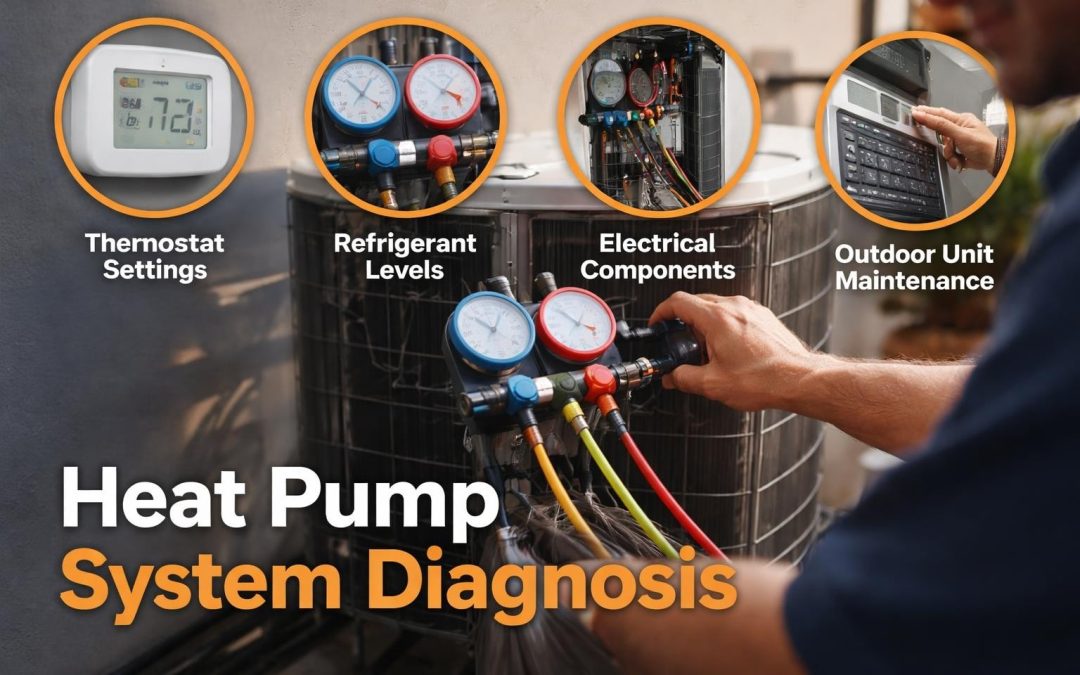
Heat pumps have become increasingly popular across the North East of England, offering efficient heating and cooling solutions for homes and businesses. As these systems gain traction, understanding how to identify and address common issues becomes essential for property owners. Whether you're experiencing reduced performance during the colder months or noticing unusual sounds from your outdoor unit, recognising when professional intervention is required can save both money and discomfort. This comprehensive guide explores the most frequent problems, diagnostic approaches, and repair solutions that keep heat pump systems running optimally throughout the year.
Understanding Heat Pump System Components
Modern heat pump installations consist of several interconnected elements that work together to transfer heat efficiently. The outdoor unit contains the compressor, fan, and coil system, whilst the indoor components include the air handler, refrigerant lines, and control systems.
Each component plays a vital role in the system's overall performance. The compressor acts as the heart of the operation, pressurising refrigerant to facilitate heat transfer. The reversing valve enables the system to switch between heating and cooling modes, making heat pumps versatile year-round solutions.
Critical Control Systems
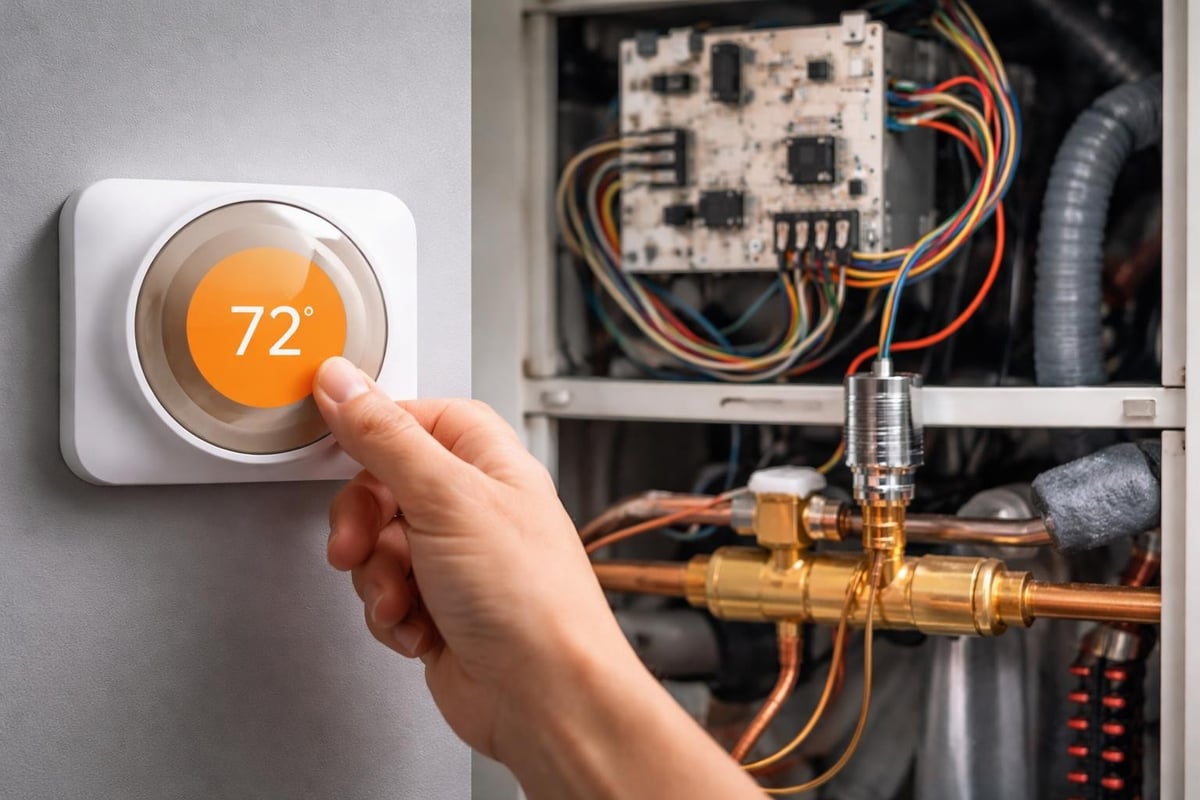
The thermostat serves as the command centre for your heat pump, regulating temperature and mode selection. Modern digital thermostats offer programmable settings and enhanced efficiency monitoring. When troubleshooting issues, checking thermostat settings should always be your first step, as incorrect configurations account for a surprising number of service calls.
Control boards and sensors monitor system performance continuously, adjusting operation to maintain optimal efficiency. These electronic components can fail due to power surges, moisture infiltration, or simple age-related deterioration.
Common Heat Pump Failures and Symptoms
Heat pump repairs often stem from predictable patterns that manifest through specific symptoms. Recognising these early warning signs enables prompt intervention before minor issues escalate into costly breakdowns.
Temperature Regulation Problems
When your heat pump fails to heat properly, the causes typically fall into several categories. Refrigerant leaks reduce the system's capacity to transfer heat, resulting in lukewarm air delivery even when the unit runs continuously. Low refrigerant levels require professional attention, as handling these substances demands proper certification and equipment.
Frozen coils represent another frequent complaint, particularly during shoulder seasons when temperatures hover near freezing. Ice accumulation on the outdoor unit prevents efficient heat exchange, forcing the system into emergency heat mode or causing complete shutdowns.
| Symptom | Likely Cause | Urgency Level |
|---|---|---|
| Blowing cold air in heat mode | Reversing valve fault or refrigerant issue | High |
| Short cycling (frequent on/off) | Thermostat malfunction or dirty filters | Medium |
| No response to thermostat | Electrical issue or control board failure | High |
| Excessive ice on outdoor unit | Defrost cycle malfunction or airflow blockage | Medium |
| Unusual grinding noises | Compressor or fan motor bearing wear | High |
Electrical and Mechanical Failures
Electrical problems account for a substantial portion of heat pump repairs. Circuit breakers that trip repeatedly indicate overload conditions, potentially caused by failing capacitors or motor issues. Capacitors store electrical energy to start the compressor and fan motors, and their failure prevents the system from initiating properly.
Mechanical wear affects moving components over time. Fan motors develop bearing issues that create grinding or squealing sounds. Compressor failure, whilst less common, represents one of the most expensive repair scenarios and sometimes warrants full system replacement depending on the unit's age.
Diagnostic Approaches for Heat Pump Issues
Professional technicians follow systematic diagnostic procedures when addressing heat pump repairs. This methodical approach ensures accurate identification of root causes rather than merely treating symptoms.
Initial Visual Assessment
The diagnostic process begins with a thorough visual inspection of both indoor and outdoor components. Technicians examine refrigerant lines for oil residue that indicates leaks, check electrical connections for corrosion or looseness, and assess the outdoor unit's physical condition.
Airflow evaluation forms a critical part of the assessment. Blocked air filters reduce system efficiency significantly, forcing components to work harder and potentially causing premature failure. The outdoor unit requires clear space around it, with vegetation and debris removed to ensure adequate airflow across the coil.
Performance Testing
Technicians measure various parameters to assess system health accurately. Temperature differential between supply and return air indicates heat transfer efficiency. Refrigerant pressures on both high and low sides reveal whether the charge level remains appropriate or leaks have occurred.
Electrical measurements identify issues with capacitors, contactors, and motor windings. Common heat pump troubleshooting includes amperage readings to detect motors drawing excessive current, suggesting mechanical binding or winding degradation.
- Measure supply and return air temperatures
- Check refrigerant pressures against manufacturer specifications
- Test capacitor microfarad values
- Verify proper voltage at all connection points
- Inspect defrost sensor and timer operation
- Assess reversing valve function during mode changes
Refrigerant System Repairs
Refrigerant-related issues require qualified professionals with proper certification. Since 2015, regulations have tightened around refrigerant handling, making DIY approaches both illegal and dangerous.
Leak Detection and Repair
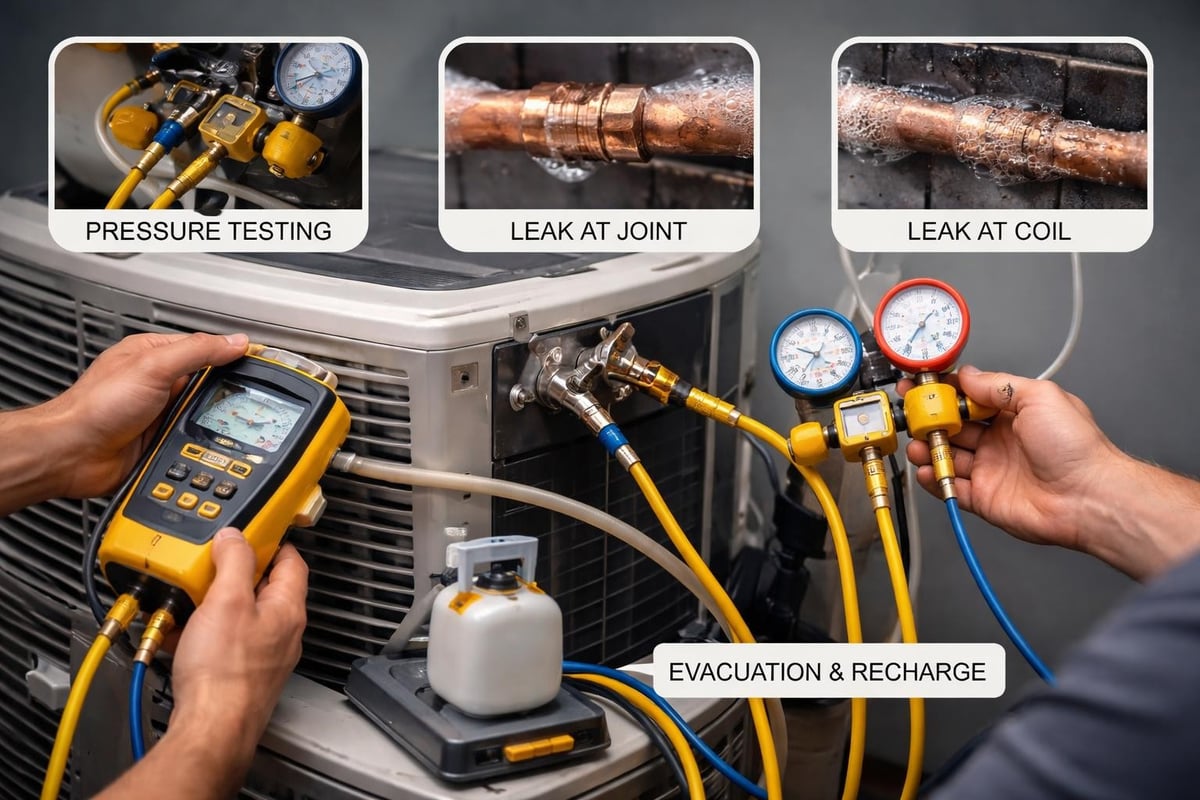
Modern leak detection employs electronic sensors and ultraviolet dye to pinpoint refrigerant escape points. Small leaks in joints or connections can often be repaired through proper brazing techniques. Coil leaks present more challenging scenarios, sometimes requiring complete coil replacement.
After repairing leaks, technicians evacuate the system to remove moisture and air before recharging with the correct refrigerant type and quantity. Improper charging severely impacts efficiency and can damage the compressor over time.
Compressor Replacement Considerations
Compressor failure represents a significant decision point for homeowners. Replacement costs can approach 40-50% of a new system's price, making age and overall condition important factors. Systems over 10-12 years old with compressor failure often warrant complete replacement rather than repair.
When compressor replacement makes sense, technicians must flush the entire refrigerant system to remove contamination. Failed compressors often distribute metal particles and acidic oil throughout the circuit, which would quickly damage a new compressor if not properly addressed.
Electrical Component Repairs and Replacements
The electrical system controlling your heat pump consists of numerous components that coordinate operation seamlessly when functioning properly. Understanding these elements helps property owners appreciate the complexity involved in heat pump repair work.
Capacitor and Contactor Services
Capacitors typically require replacement every 5-7 years as part of routine maintenance, though failures can occur sooner in harsh conditions. Dual capacitors serve both the compressor and fan motor, whilst some systems use separate units for each component.
Contactors act as heavy-duty switches that engage when the thermostat calls for heating or cooling. These components endure substantial electrical stress and develop pitted contacts over time. Replacement is straightforward but essential when degradation occurs, as poor contact creates heat and potential fire hazards.
Control Board Diagnostics
Modern heat pump control boards contain sophisticated circuitry that monitors system parameters and adjusts operation accordingly. Board failures manifest in various ways, from complete system non-response to erratic cycling patterns.
- Verify proper voltage supply to the board
- Check for visible signs of damage or burnt components
- Test sensor inputs to confirm proper readings
- Assess relay outputs during operation cycles
- Replace defective boards with exact manufacturer replacements
- Recalibrate settings according to system specifications
Defrost Cycle Problems and Solutions
Heat pumps operating in heating mode during cold weather accumulate frost on outdoor coils as moisture from the air freezes during heat extraction. The defrost cycle temporarily reverses operation to melt this ice, maintaining efficiency.
Defrost Timer and Sensor Issues
Mechanical defrost timers initiate the defrost cycle at preset intervals, typically every 30-90 minutes of compressor runtime. These devices can fail mechanically, causing either too-frequent defrosting (reducing efficiency) or insufficient defrosting (allowing ice buildup).
Modern systems employ sensors that monitor coil temperature and outdoor conditions to optimise defrost timing. Sensor failures lead to inappropriate defrost initiation, wasting energy or allowing performance-degrading ice accumulation. The interactive troubleshooting approaches offered by manufacturers help identify these specific component failures.
Emergency Heat Strip Function
Auxiliary heat strips provide backup heating when the heat pump cannot meet demand or during defrost cycles. Stuck relays can cause these strips to operate continuously, creating extremely high electricity bills without homeowner awareness.
Proper heat pump repairs ensure auxiliary heat activates only when necessary, maintaining the efficiency advantages that make heat pumps attractive. Technicians test the control sequences that govern auxiliary heat engagement as part of comprehensive service visits.
Preventative Maintenance to Minimise Repairs
Regular maintenance substantially reduces the frequency and severity of heat pump repairs whilst extending system lifespan. Establishing a consistent maintenance schedule pays dividends through improved reliability and lower operating costs.
Homeowner Maintenance Tasks
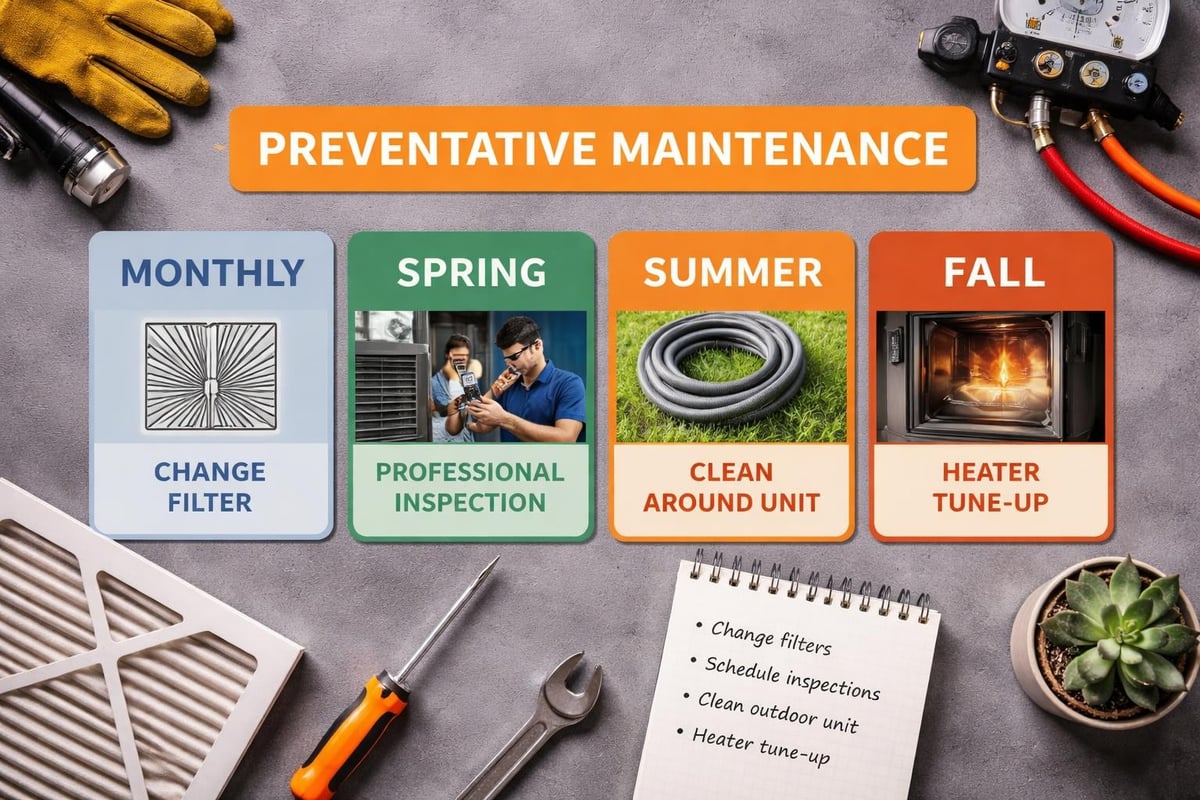
Property owners can perform several simple tasks that maintain system health between professional service visits. Filter changes every 1-3 months (depending on usage and environment) ensure proper airflow and reduce strain on blower motors.
The outdoor unit requires periodic inspection to remove leaves, grass clippings, and other debris that accumulate around and within the cabinet. Maintaining at least 60cm clearance around the unit facilitates proper airflow and simplifies future service access.
| Maintenance Task | Frequency | Difficulty | Impact |
|---|---|---|---|
| Replace air filters | Monthly to quarterly | Easy | High |
| Clear outdoor unit debris | Monthly | Easy | High |
| Check thermostat operation | Seasonally | Easy | Medium |
| Inspect visible refrigerant lines | Quarterly | Easy | Low |
| Professional system service | Annually | N/A | Very High |
Professional Service Requirements
Annual professional maintenance addresses components and systems beyond homeowner capability. Technicians clean coils using specialised solutions that remove accumulated dirt without damaging delicate fins. They measure refrigerant charge, test capacitors, lubricate motors, and verify proper operation of all safety controls.
Spring and autumn represent ideal times for professional service, preparing the system for its heaviest usage periods. This proactive approach identifies developing issues before they cause failures during peak heating or cooling demand. Much like water heater maintenance, regular attention to heat pumps prevents emergency situations.
Noise Problems and Vibration Issues
Unusual sounds from your heat pump indicate specific problems that often worsen if ignored. Learning to distinguish normal operational sounds from concerning noises helps homeowners respond appropriately.
Common Sound Issues
Grinding or metal-on-metal scraping suggests bearing failure in fan motors or debris within the unit. Hissing sounds often indicate refrigerant leaks, particularly when accompanied by reduced heating performance. Clicking or buzzing from the outdoor unit during startup typically relates to contactor or relay operation, though excessive clicking may signal electrical faults.
Banging or clanging when the system initiates the defrost cycle results from the reversing valve changing position. Whilst this sound is normal to some degree, excessively loud banging suggests valve problems requiring attention. The troubleshooting resources from major manufacturers provide sound-based diagnostic guidance.
Vibration and Mounting Problems
Excessive vibration stems from imbalanced fan blades, loose mounting hardware, or degraded vibration isolators. These issues cause secondary damage over time as continuous vibration loosens connections and creates metal fatigue.
Technicians address vibration through various interventions depending on the source. Rebalancing fan blades, replacing worn isolators, and securing loose components typically resolve these concerns. Proper mounting on stable bases prevents vibration transmission into the building structure.
Age-Related Repair Considerations
Heat pump systems typically last 12-15 years with proper maintenance, though component lifespans vary. Understanding the repair-versus-replace equation helps property owners make informed financial decisions.
Evaluating Repair Economics
Early in a system's life, most repairs prove cost-effective compared to replacement. As units age beyond 8-10 years, the calculation becomes more nuanced. Multiple component failures or expensive repairs like compressor replacement warrant serious consideration of full system replacement.
Energy efficiency improvements in modern heat pumps mean newer units often operate 30-40% more efficiently than models from the early 2010s. This efficiency gain can offset replacement costs through reduced operating expenses over several years.
System Replacement Indicators
Several factors suggest replacement rather than continued repairs. Refrigerant type presents one consideration, as older R-22 systems face increasingly expensive refrigerant costs due to phase-out regulations. Repeated repairs within a short timeframe indicate systemic deterioration rather than isolated component failures.
- System age exceeding 12 years
- Repair costs approaching 50% of replacement value
- Declining efficiency with rising energy bills
- Use of obsolete R-22 refrigerant
- Inability to maintain comfortable temperatures
- Frequent breakdowns requiring emergency service
Winter Performance Optimisation
Heat pumps face their greatest challenges during cold weather when heating demand peaks yet efficiency naturally declines. Understanding winter operation helps homeowners maintain realistic expectations and identify actual problems versus normal behaviour.
Cold Weather Efficiency Factors
As outdoor temperatures drop, heat pump capacity decreases because less heat energy exists in cold air for extraction. Most modern units maintain reasonable efficiency down to -15°C, though supplementary heat becomes necessary at extreme temperatures.
Ice and frost formation on outdoor coils is normal during operation, provided the defrost cycle clears it periodically. Continuous ice buildup that persists through multiple cycles indicates defrost system malfunction requiring professional heat pump repairs.
Auxiliary Heat Management
Understanding when auxiliary heat should engage helps identify control problems. Most systems activate supplementary heat when outdoor temperatures fall below a set threshold (typically -5°C to 0°C) or when the thermostat setting exceeds current temperature by more than 2-3 degrees.
Constant auxiliary heat operation suggests heat pump malfunction, thermostat misconfiguration, or undersized equipment. Professional assessment determines whether repairs can restore proper operation or system replacement becomes necessary for adequate comfort.
Choosing Professional Repair Services
Selecting qualified technicians for heat pump repairs ensures proper diagnosis and lasting solutions. The complexity of modern systems demands specific training and certification that not all service providers possess.
Technician Qualifications
Proper refrigerant handling requires F-Gas certification in the UK, ensuring technicians understand environmental regulations and safety protocols. Manufacturer-specific training provides insights into particular brands' quirks and optimal service procedures.
Experience with heat pump technology specifically matters, as these systems differ substantially from traditional boilers or air conditioning units. Technicians accustomed to conventional heating may lack the specialised knowledge that modern heat pumps require, particularly regarding advanced features like variable-speed compressors and smart controls.
Service Provider Selection Criteria
Established local businesses offer advantages including faster response times, familiarity with regional climate challenges, and accountability within the community. Companies operating since the 1980s demonstrate staying power that suggests reliable service and fair dealing.
Transparent pricing, detailed diagnostics, and clear communication about repair options versus replacement indicate professional operations. Beware of services that diagnose problems without proper testing or pressure immediate decisions without allowing time for consideration.
Smart Thermostat Integration and Repairs
Modern heat pumps increasingly integrate with smart thermostats that optimise efficiency through learning algorithms and remote access. These advanced controls introduce new considerations for troubleshooting and repairs.
Compatibility and Configuration
Not all smart thermostats work properly with heat pump systems, particularly those requiring specific wiring for auxiliary heat control. Improper configuration can cause inefficient operation, such as auxiliary heat activating unnecessarily or the system failing to engage heating mode properly.
Professional installation ensures proper setup of heat pump-specific settings within smart thermostats. Parameters like temperature differential, auxiliary heat lockout, and defrost cycle accommodation require correct configuration to prevent problems that mimic equipment failures.
Communication Failures
When smart thermostats lose connection with heat pump systems, homeowners may experience unresponsive controls or erratic operation. These issues sometimes stem from weak Wi-Fi signals, outdated firmware, or incompatible software updates rather than actual equipment problems.
Systematic troubleshooting separates communication issues from genuine heat pump failures. Testing system operation with manual controls or temporarily reverting to a basic thermostat helps identify whether repairs target the control system or the heat pump itself.
Emergency Repair Situations
Certain heat pump failures require immediate professional attention to prevent property damage, safety hazards, or complete system breakdown. Recognising these emergencies helps homeowners respond appropriately.
Critical Failure Indicators
Complete system shutdown during extreme weather represents an emergency, particularly when temperatures threaten pipe freezing or vulnerable occupants face health risks. Refrigerant leaks producing hissing sounds and oily residue require urgent attention due to environmental and potential health concerns.
Electrical issues manifesting as burning smells, repeated breaker trips, or visible sparking demand immediate system shutdown and emergency service. These conditions present fire risks that supersede comfort considerations. Resources like heat pump troubleshooting videos help identify serious issues requiring professional intervention.
Temporary Measures
Until technicians arrive, homeowners can take steps to maintain basic comfort and prevent secondary damage. Portable electric heaters provide temporary warmth, though they should never be left unattended or used near flammable materials. Ensuring pipes in unheated spaces receive heat trace or drain-down prevents costly freeze damage.
Documenting symptoms through photos, videos, and written notes helps technicians diagnose issues more efficiently. Recording when problems occur, what preceded them, and any unusual sounds or smells provides valuable diagnostic information that speeds repairs.
Warranty Coverage and Repair Costs
Understanding warranty terms and typical repair costs helps homeowners budget appropriately and make informed decisions about service providers and repair approaches.
Manufacturer Warranty Provisions
Most heat pump manufacturers provide 5-10 year warranties on major components like compressors, with shorter coverage on other parts. Labour typically isn't included in manufacturer warranties unless separately purchased, meaning homeowners pay for technician time even when parts are free.
Warranty coverage often requires professional installation documentation and regular maintenance records. Neglecting routine service or using unqualified technicians can void warranty protection, leaving homeowners responsible for full repair costs. Maintaining comprehensive service records protects warranty claims when failures occur.
Typical Repair Cost Ranges
Simple repairs like capacitor or contactor replacement typically cost £150-£300 including parts and labour. Refrigerant leak repairs vary widely depending on location and severity, ranging from £200-£800. Control board replacements generally fall between £300-£600.
Major repairs like compressor replacement can exceed £1,500-£2,500, at which point system replacement often makes more economic sense for older units. Understanding these cost ranges helps homeowners evaluate quotes and make appropriate repair-versus-replace decisions.
Maintaining your heat pump through regular servicing and addressing repairs promptly ensures reliable comfort and optimal efficiency throughout the year. When issues arise, professional diagnosis and quality repairs protect your investment whilst avoiding the disruption and expense of emergency breakdowns. Since 1983, NU Heat North East Ltd has provided expert heating services throughout the North East of England, with qualified technicians ready to diagnose and repair heat pump systems efficiently. Our team based in Newbiggin-by-the-Sea delivers swift, effective solutions backed by decades of experience, and we now offer 0% interest financing to make essential repairs more affordable.