
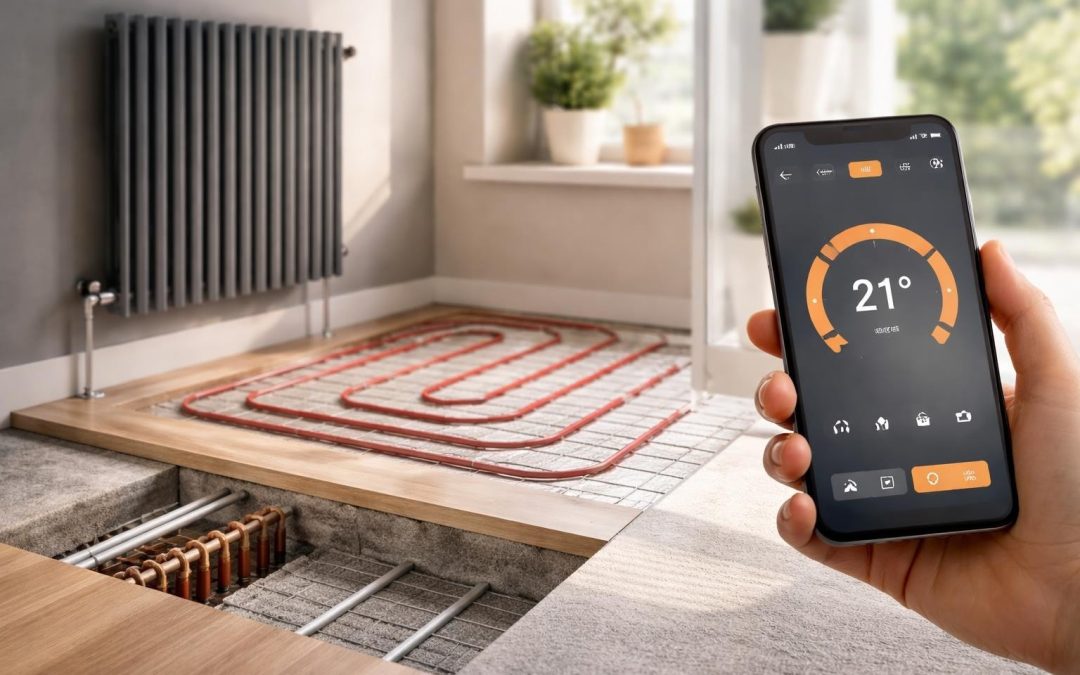
Modern homeowners increasingly recognise that one-size-fits-all heating solutions rarely deliver optimal comfort or efficiency. Bespoke heating represents a fundamental shift in how we approach domestic warmth, moving beyond standard installations to create systems precisely calibrated to individual properties, lifestyles, and aesthetic preferences. This tailored approach considers everything from room dimensions and insulation levels to daily routines and personal comfort preferences, ensuring every element works harmoniously to deliver exceptional performance.
Understanding Bespoke Heating Systems
Bespoke heating goes far beyond simply choosing between a boiler and a heat pump. It encompasses a comprehensive evaluation of your property's unique characteristics, occupancy patterns, and energy requirements to design a solution that performs optimally in your specific circumstances.
What Distinguishes Bespoke from Standard Heating
Traditional heating installations typically follow standardised specifications, with technicians selecting equipment from predetermined ranges and following conventional layout patterns. By contrast, bespoke heating begins with detailed consultation and property assessment.
Key differentiating factors include:
- Precise heat loss calculations for each room rather than whole-house approximations
- Custom radiator sizing and positioning based on furniture placement and room usage
- Tailored control systems that align with household routines and individual zone requirements
- Integration with existing architectural features rather than compromising design aesthetics
- Future-proofing considerations that accommodate lifestyle changes and potential extensions

This personalised approach ensures that bespoke commercial heating solutions deliver measurable improvements in both comfort and running costs compared to standardised alternatives.
Designing Your Custom Heating Solution
Creating an effective bespoke heating system requires careful consideration of multiple interconnected factors. Professional designers analyse your property from architectural, thermal, and lifestyle perspectives to develop truly optimised solutions.
Property Assessment and Heat Requirements
Every bespoke heating project begins with comprehensive property evaluation. Technicians examine insulation quality, window specifications, room orientations, and thermal bridging to understand exactly how your home gains and loses heat throughout the day.
Modern assessment techniques employ thermal imaging cameras to identify cold spots and air leakage points that standard surveys might miss. This data informs precise calculations about heating capacity requirements for each zone.
| Assessment Factor | Impact on System Design | Typical Measurement |
|---|---|---|
| Wall insulation | Radiator sizing | U-value (W/m²K) |
| Window efficiency | Heat loss calculation | Energy rating (A-G) |
| Room volume | Boiler capacity | Cubic metres |
| Air tightness | Ventilation needs | Air changes per hour |
The results shape everything from boiler selection to emitter positioning, ensuring your system delivers consistent warmth without wasting energy heating spaces unnecessarily.
Zone Configuration and Control Systems
One hallmark of bespoke heating lies in sophisticated zoning that reflects how you actually use your home. Rather than treating the entire property as a single space, custom systems divide it into independently controlled areas.
This might mean separate zones for:
- Living spaces used primarily during evenings
- Bedrooms requiring warmth only at specific times
- Home offices needing consistent daytime heating
- Bathrooms demanding rapid heat-up capabilities
- Guest rooms used intermittently
Smart thermostats and programmable controls allow each zone to operate on its own schedule, dramatically reducing energy consumption whilst maintaining comfort exactly where and when needed.
Equipment Selection for Bespoke Applications
Choosing appropriate heating equipment requires balancing performance, efficiency, aesthetics, and budget within your specific context. Bespoke heating professionals guide this selection process to ensure every component contributes to overall system excellence.
Boiler and Heat Source Options
Modern bespoke heating installations can incorporate various heat sources, each offering distinct advantages depending on property characteristics and homeowner priorities.
Conventional gas boilers remain popular for properties with mains gas access, particularly newer condensing models that achieve efficiency ratings above 90%. Combi boilers suit smaller homes without hot water storage space, whilst system boilers work better in larger properties with multiple bathrooms.
Heat pumps increasingly feature in bespoke designs, especially for well-insulated properties. Air-source models extract warmth from outside air, whilst ground-source variants utilise stable underground temperatures. Both deliver excellent efficiency but require careful system design to maximise performance.
Biomass boilers appeal to rural properties with space for fuel storage and a commitment to renewable heating. These systems burn wood pellets or chips, offering carbon-neutral operation when sourced sustainably.
Specialists can even incorporate custom heating solutions for unique applications, ensuring your system meets even the most demanding specifications.
Emitter Selection and Positioning
The devices that actually deliver warmth into your rooms deserve equal consideration to the heat source itself. Bespoke heating designs match emitters precisely to room requirements and aesthetic preferences.
Traditional radiators work effectively in most settings, but custom solutions might include:
- Designer radiators that serve as sculptural features
- Vertical models for rooms with limited wall space
- Low-surface-temperature radiators for children's rooms
- Underfloor heating for consistent, invisible warmth
- Skirting heating systems that maximise wall space availability
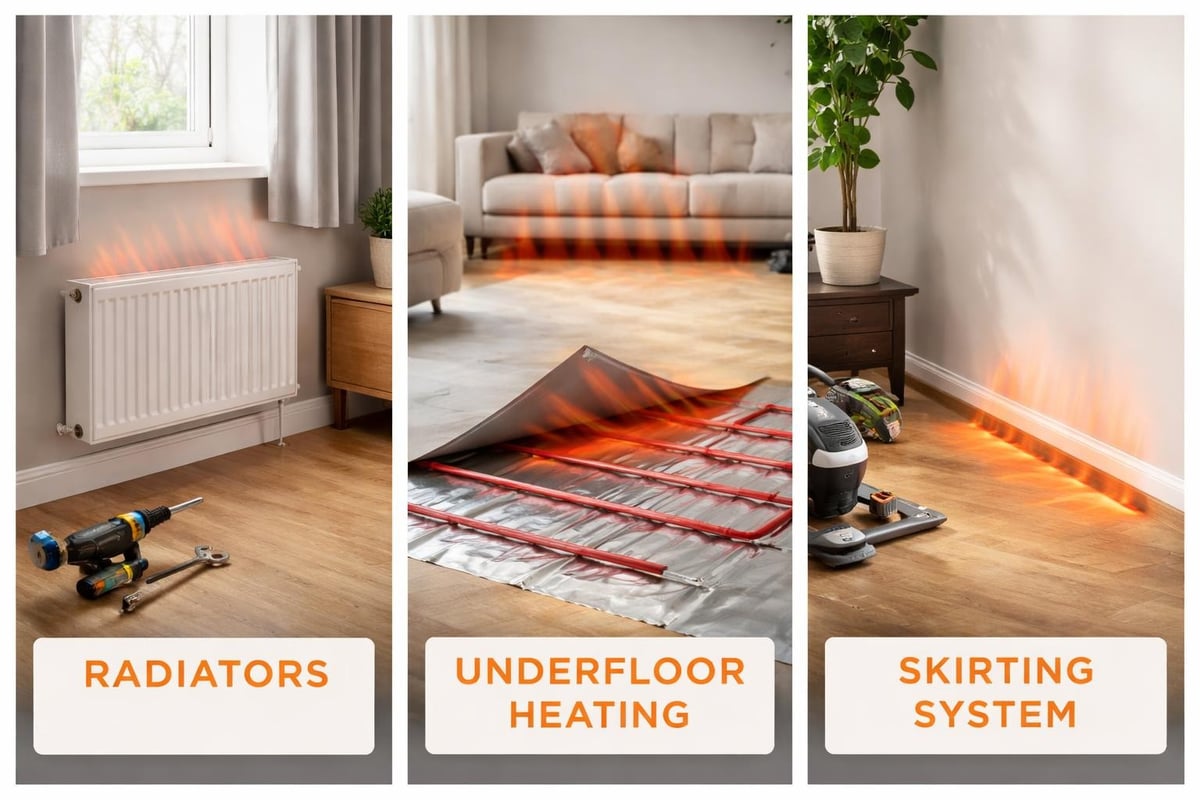
Positioning considers furniture layouts, curtain placements, and traffic flow to optimise heat distribution whilst maintaining interior design integrity.
Installation Considerations and Best Practices
Transforming bespoke heating designs into functioning reality demands meticulous installation work by qualified professionals. Quality workmanship during this phase determines whether your system achieves its full potential.
Pipework Design and Efficiency
Custom heating systems require thoughtful pipework routing that balances hydraulic efficiency with practical constraints. Specialists calculate pipe diameters to ensure adequate flow rates whilst minimising pump energy consumption.
Modern installations increasingly employ manifold systems that allow independent control of each heating circuit. This approach simplifies balancing and troubleshooting whilst providing flexibility for future modifications.
Proper insulation of pipework represents another critical consideration, particularly for pipes running through unheated spaces. Custom foam insulation minimises heat loss and prevents condensation issues that could damage building fabric over time.
System Balancing and Commissioning
Even perfectly designed bespoke heating systems require careful balancing to achieve optimal performance. This process involves adjusting flow rates through each circuit to ensure every radiator reaches its design temperature simultaneously.
Professional commissioning includes:
- Flushing the system to remove installation debris
- Pressure testing to confirm leak-free operation
- Setting radiator lockshield valves to balance flow
- Programming controls according to agreed schedules
- Demonstrating operation to homeowners
- Providing comprehensive documentation
This attention to detail transforms theoretical designs into practical systems that deliver measured improvements in comfort and efficiency.
Maintenance Requirements for Custom Systems
Bespoke heating installations represent significant investments that deserve protection through appropriate maintenance regimes. Regular servicing ensures continued reliability, efficiency, and longevity.
Annual Service Schedules
Professional heating engineers recommend annual servicing for all domestic heating systems, regardless of type or complexity. These inspections identify developing issues before they cause breakdowns or efficiency losses.
Typical service visits include:
- Boiler combustion analysis and efficiency testing
- Safety device functionality verification
- Heat exchanger inspection and cleaning
- Expansion vessel and pressure relief checks
- Control system operation confirmation
- Water quality testing and treatment if necessary
For bespoke systems with multiple zones or advanced controls, technicians also verify that programming remains appropriate for current household patterns, making adjustments as lifestyles evolve.
System Monitoring and Optimisation
Modern bespoke heating often incorporates monitoring capabilities that provide insights into system performance and energy consumption. Smart controls track usage patterns, highlight anomalies, and sometimes offer optimisation suggestions.
| Monitoring Parameter | What It Reveals | Action Threshold |
|---|---|---|
| Flow temperature | Boiler efficiency | Consistently above 70°C |
| Runtime hours | Component wear | Unusual increases |
| Energy consumption | System efficiency | Month-on-month rises |
| Zone performance | Balance accuracy | Temperature variations |
Homeowners who actively engage with these monitoring tools often identify opportunities for further efficiency improvements or detect developing faults before they escalate.
Cost Considerations and Financial Benefits
Bespoke heating systems typically command premium prices compared to standardised installations, but this investment delivers tangible returns through improved comfort, reduced running costs, and enhanced property value.
Initial Investment Components
Understanding where costs arise helps homeowners make informed decisions about specification priorities and potential compromises.
Primary cost elements include:
- Design and consultation fees for professional system planning
- Equipment costs varying significantly based on heat source selection
- Installation labour reflecting system complexity and customisation level
- Additional materials for bespoke pipework routing and zone creation
- Advanced controls enabling sophisticated scheduling and monitoring
- Commissioning and balancing to achieve optimal performance
Whilst these combined expenses exceed basic installations, the resulting system delivers performance impossible to achieve through standardised approaches.
Long-Term Savings and Value
Bespoke heating systems generate ongoing financial benefits that offset higher initial costs over time. Properly designed custom installations typically reduce heating bills by 20-40% compared to outdated or poorly specified systems.
Energy savings arise from multiple sources. Precise equipment sizing eliminates the inefficiency of oversized boilers cycling on and off. Zone controls prevent waste from heating unused spaces. Quality installation and balancing ensure maximum heat transfer efficiency throughout the system.
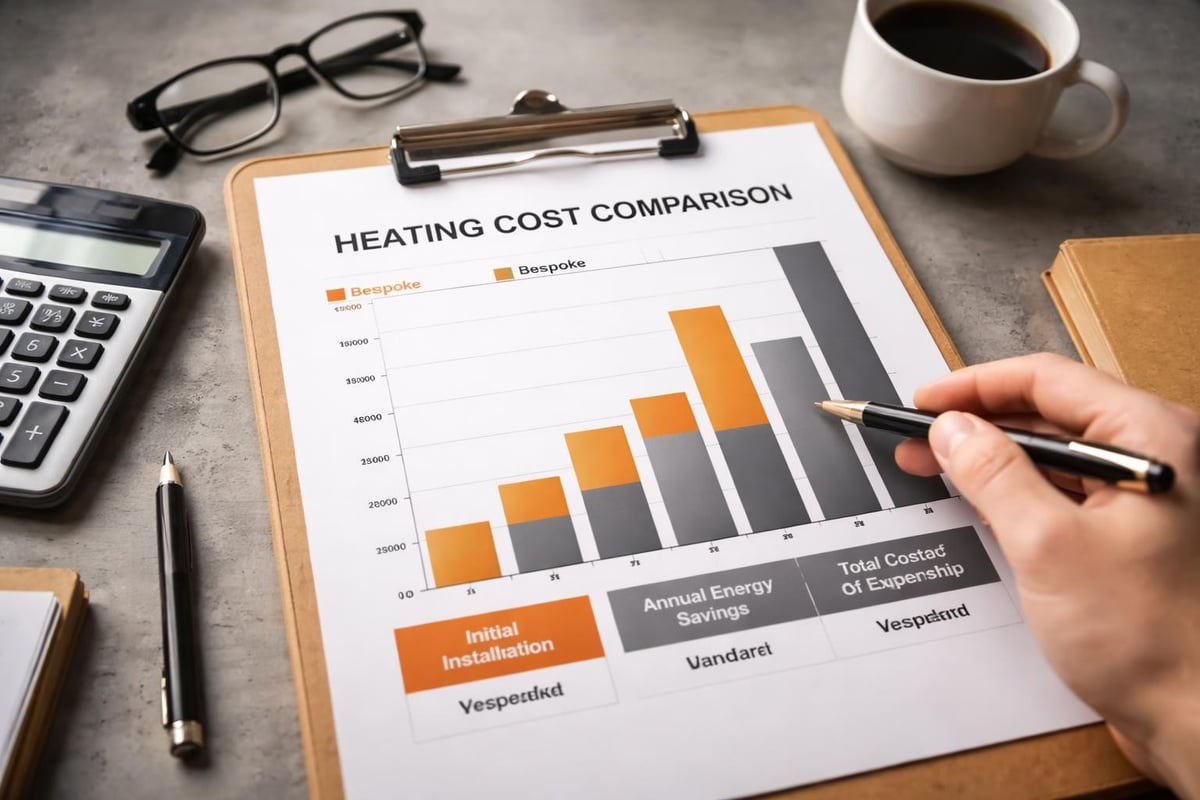
Property value considerations also merit attention. Homes with professionally designed, efficient heating systems appeal strongly to prospective buyers, potentially commanding premium prices in competitive markets.
Future-Proofing Your Heating Investment
Effective bespoke heating design anticipates future requirements rather than simply addressing current needs. This forward-thinking approach protects your investment against changing circumstances and evolving technologies.
Accommodation for Lifestyle Changes
Life rarely remains static, and heating systems should adapt accordingly. Bespoke designs can incorporate flexibility for common scenarios like home extensions, loft conversions, or changing occupancy patterns.
Specifications might include oversized boilers with capacity for additional radiators, pipework infrastructure pre-installed to future extension locations, or modular control systems that scale easily. These provisions minimise disruption and expense when modifications become necessary.
Technology Integration and Upgrades
The heating industry continues evolving rapidly, with new efficiency standards, control technologies, and renewable options emerging regularly. Well-designed bespoke systems accommodate future enhancements without requiring complete replacement.
Modern installations increasingly feature hybrid-ready configurations that can integrate heat pumps alongside existing boilers, allowing gradual transitions to renewable heating as technology matures and costs decline. Open-protocol control systems ensure compatibility with emerging smart home platforms rather than locking homeowners into proprietary ecosystems.
Professional Selection and Project Management
Success with bespoke heating depends critically on choosing qualified professionals who combine technical expertise with genuine commitment to customer satisfaction. This selection deserves careful consideration and thorough research.
Credentials and Experience Verification
Reputable heating contractors hold relevant qualifications and industry certifications that demonstrate competence and ongoing professional development. In the UK, Gas Safe registration remains essential for anyone working with gas appliances, whilst additional credentials like OFTEC registration apply to oil systems.
Experience with bespoke projects specifically matters significantly. Technicians accustomed to standardised installations may lack the design skills and problem-solving abilities that custom work demands. Request examples of previous bespoke projects and customer references before making commitments.
Communication and Project Coordination
Bespoke heating installations involve multiple phases from initial consultation through final commissioning. Clear communication throughout this journey ensures alignment between expectations and outcomes.
Effective contractors provide:
- Detailed written quotations specifying all included work
- Realistic timescales acknowledging potential complications
- Regular progress updates during installation
- Transparent handling of any necessary variations
- Comprehensive handover documentation and system training
This professional approach minimises stress and uncertainty whilst maximising satisfaction with the finished installation.
Integration with Renewable Technologies
Contemporary bespoke heating increasingly incorporates renewable energy sources that reduce environmental impact whilst delivering excellent performance. These technologies integrate seamlessly when properly specified from the outset.
Solar Thermal and Heat Pump Combinations
Solar thermal panels capture free energy from sunlight to preheat water, reducing boiler workload during warmer months. When combined with efficient condensing boilers or heat pumps, these systems achieve impressive overall efficiency figures.
Bespoke designs optimise this integration through careful sizing and intelligent controls that prioritise solar energy whenever available, switching seamlessly to backup heating when needed. Buffer tanks store excess solar heat for later use, maximising the benefit from every sunny day.
Biomass and Hybrid Solutions
Rural properties without mains gas access increasingly adopt biomass boilers for sustainable heating. These systems burn wood pellets or chips, offering carbon-neutral operation when fuel comes from responsibly managed sources.
Hybrid configurations combine biomass with supplementary heat sources like air-source heat pumps, each operating when conditions favour their strengths. Advanced controls manage this coordination automatically, delivering optimal efficiency across varying weather conditions and heating demands.
Bespoke heating transforms houses into genuinely comfortable homes through systems designed around your specific requirements rather than industry-standard specifications. By investing in professional assessment, quality equipment, and expert installation, you create heating infrastructure that delivers superior performance, efficiency, and reliability for decades. Whether you're renovating an existing property or planning a new build project, NU Heat North East Ltd brings over four decades of experience to designing and installing heating systems throughout the North East of England. Our qualified technicians work closely with homeowners to understand their unique requirements, developing tailored solutions that balance performance, aesthetics, and budget whilst delivering complete satisfaction.